Onions
Onions, with their crisp, flavorful bulbs and tall, slender green tops, add a practical and aromatic touch to any garden. Known for their versatility in the kitchen, onions come in a variety of types, including red, yellow, and white, each with its unique flavor profile. Their growth begins with small, green shoots that develop into robust, layered bulbs.
In Florida planting zone 9, onions grow well during the cooler months. Plants form sturdy bulbs beneath the soil while their tops reach skyward. Watching bulbs swell and mature underground is a satisfying marker that harvest time is approaching.
For those new to gardening, onions are a rewarding choice. They are relatively easy to grow and provide a continuous supply of fresh bulbs that can be used in a wide range of dishes. Whether you enjoy them raw, sautéed, or caramelized, onions bring a flavorful element to your meals.
Ocala Food Forest participates in affiliate programs that help support our educational and community projects. When you purchase through the links provided on our site, we may receive a small commission at no additional cost to you. This support allows us to keep the site free to access and continue researching what grows best in Central Florida’s Zone 9 climate. We only recommend products and resources we have personally tested and trust.
The vegetables listed on this page are not the only ones that can thrive in this region of Florida, but they represent the top recommended varieties for optimal growth and success in local conditions.
Onion Varieties:
Granex (Vidalia)
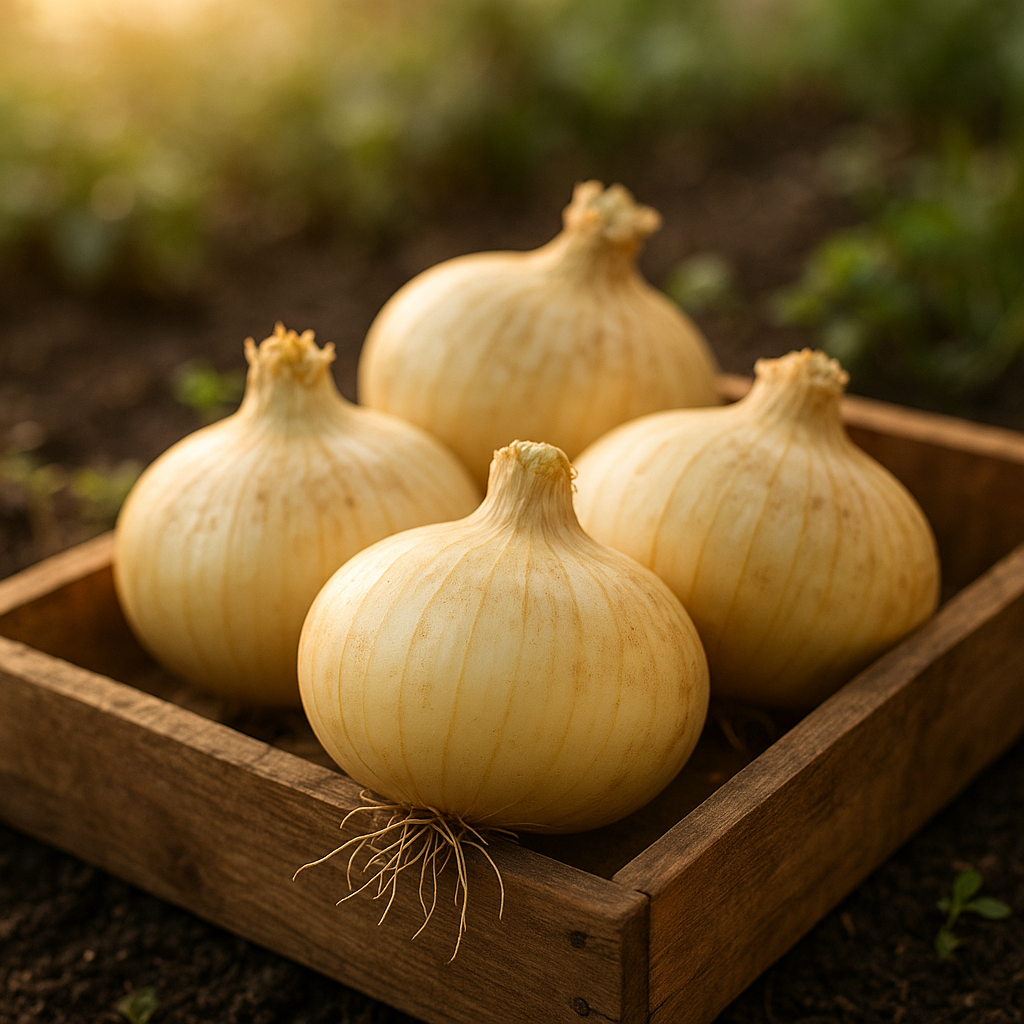
Description: Granex onions (often called Vidalia when grown in Georgia’s designated region) are sweet onions with a mild flavor. They have a slightly flattened shape and pale yellow skin.
Growing Season: Fall and Winter
USDA Planting Zone: 7–10
Special Notes: Excellent for fresh eating due to their mild flavor. Great for salads and sandwiches.
Texas Super Sweet

Description: Texas Super Sweet onions are large, globe-shaped onions with a very sweet flavor. They have light yellow to white skin and are known for good storage.
Growing Season: Fall and Winter
USDA Planting Zone: 7–10
Special Notes: Suitable for fresh use and storage. One of the sweetest onion types commonly grown.
Red Creole

Description: Red Creole onions are small to medium, globe-shaped onions with deep red skin and a more pungent, classic onion flavor.
Growing Season: Fall and Winter
USDA Planting Zone: 7–10
Special Notes: Good storage and strong performance in warm climates. Adds color to salads and cooked dishes.
Yellow Granex
Hybrid

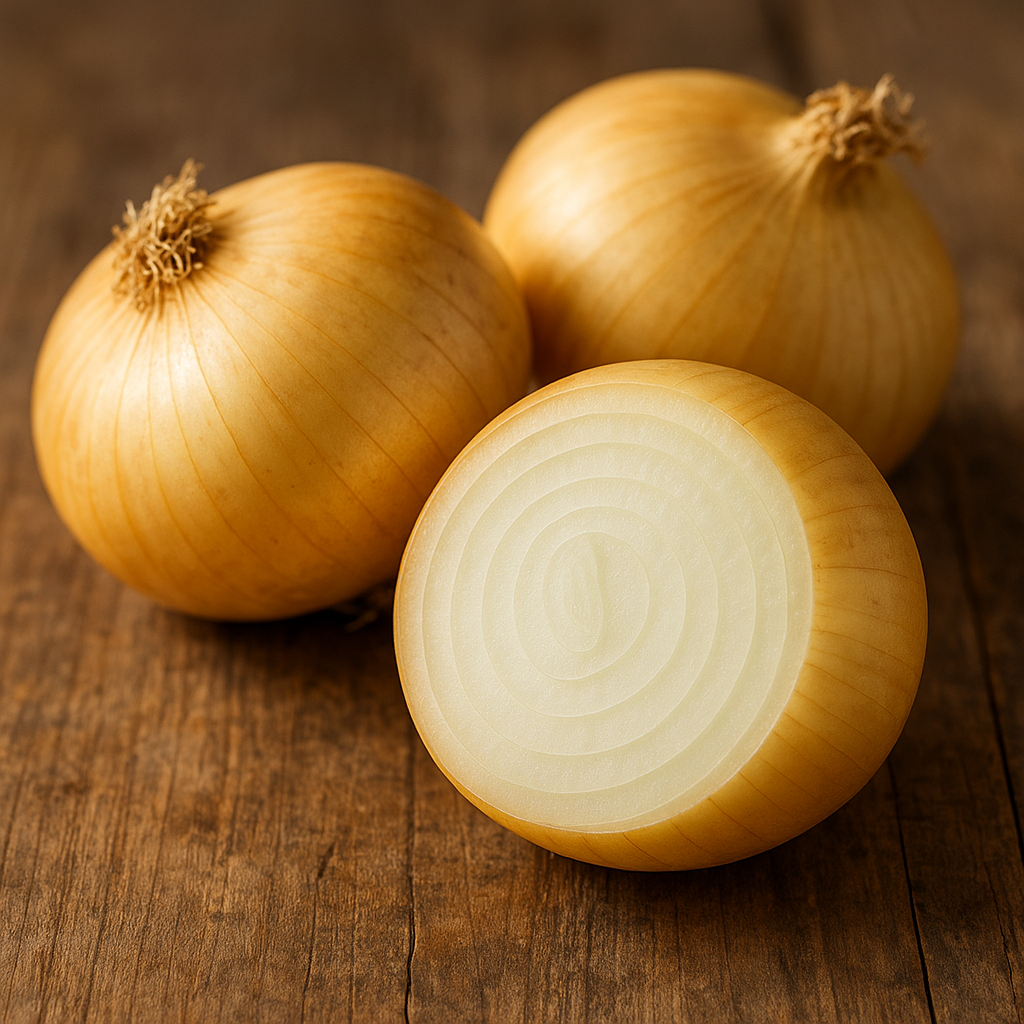
Description: Yellow Granex is a sweet, mild onion bred for warmer climates. Bulbs are slightly flattened and best used fresh.
Growing Season: Fall and Winter
USDA Planting Zone: 7–10
Special Notes: Excellent for fresh eating and cooking with low pungency.
White Bermuda

Description: White Bermuda onions are large, flat onions with a mild, sweet flavor and white skin, commonly used fresh or lightly cooked.
Growing Season: Fall and Winter
USDA Planting Zone: 7–10
Special Notes: Reliable, quick-maturing variety for salads, sandwiches, and general cooking.
Egyptian Walking Onion (Allium × proliferum)

Description: A perennial “top-setting” onion that forms clusters of bulbils on stalk tops instead of flowers. Bulbils can be replanted, allowing the patch to slowly spread over time.
Growing Season: Fall, Winter, and Spring
USDA Planting Zone: 3–9
Special Notes: Strong, pungent bulbs; greens used like scallions. Top-set bulbils are excellent pickled or used fresh. Leave in-ground year-round for perennial regrowth.
Florida Vegetable Planting Guide
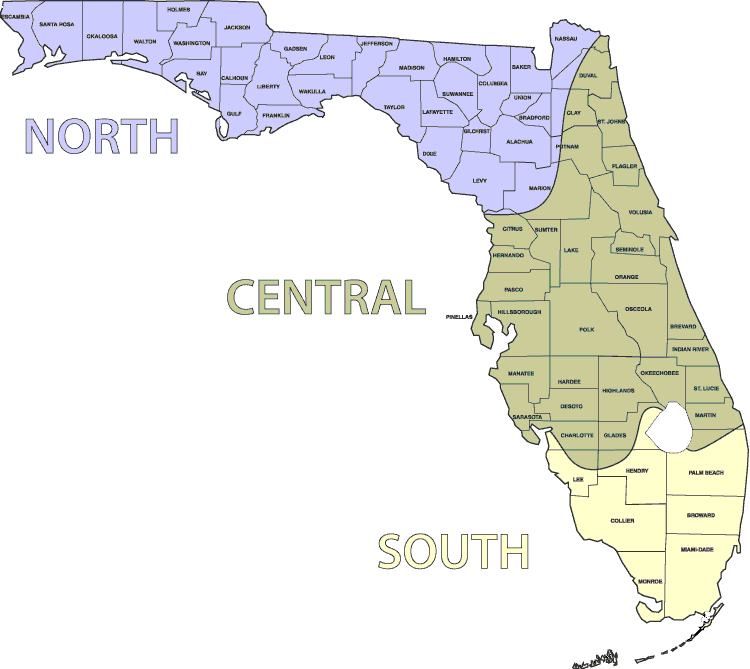
This guide provides information on when to start seeds inside, direct seed, and transplant starter plants in the different regions of Florida.
North USDA Planting Zones: 8b–9a
Central USDA Planting Zones: 9b & some of 10a
South USDA Planting Zones: 10a–11b
Visit the U.S. National Arboretum for an Exact USDA Planting Zone Map.
| Bulb Onions | North Florida | Central Florida | South Florida |
|---|---|---|---|
| Start Seeds Inside | Sep–Nov | Oct | Oct |
| Direct Seed | Not recommended | Not recommended | Not recommended |
| Transplant Starter Plants | Mid Sep–Mid Nov | Oct | Oct |
| Bunching Onions | North Florida | Central Florida | South Florida |
|---|---|---|---|
| Start Seeds Inside | Jul–Feb | Jul–Feb | Aug–Feb |
| Direct Seed | Aug–Mar | Aug–Mar | Sep–Mar |
| Transplant Starter Plants | Sep–Mar | Sep–Mar | Oct–Mar |
Planting Guide – Onions
Getting Started – Bulb & Bunching Onions
Bulb Onions – Start Seeds Inside:
Starting onion seeds indoors in the fall provides controlled conditions and strong seedlings for transplanting during cool weather.
Bulb Onions – Direct Seed:
Direct seeding bulb onions is not recommended because germination and uniform bulb sizing are harder to manage outdoors.
Bulb Onions – Transplant Starter Plants:
Transplanting during cooler months helps plants establish and size bulbs before heat ramps up.
Bunching Onions – Start Seeds Inside:
Starting indoors supports steady germination and gives you strong transplants for a quick start outside.
Bunching Onions – Direct Seed:
Direct seeding in mild weather produces quick establishment and steady green growth.
Bunching Onions – Transplant Starter Plants:
Transplanting in cool weather reduces stress and supports fast regrowth and thick stems.
Depending on type, onions may be grown from seed, sets, transplants, or division. Bulb onions are typically planted in fall in Florida. Green/bunching onions can be grown fall through spring. Plant close and harvest (thin) as needed. Insert sets upright for straight stems. Divide and reset multiplier types yearly for best performance.
Soil, Sun, Water, Spacing, and Additional Tips
Soil:
Onions prefer well-drained, fertile soil with a pH between 6.0 and 6.8. Compost improves structure and helps bulbs size evenly.
Sun:
Full sun is ideal. Aim for 6–8 hours of direct sunlight daily for best bulb formation.
Watering:
Keep soil evenly moist (not soggy). Mulch helps retain moisture and reduces weeds without disturbing shallow roots.
Spacing:
- Bulb Onions: Plant sets/transplants 4–6 inches apart in rows about 14 inches apart.
- Bunching Onions: Plant about 2 inches apart for green onions; 4–6 inches apart for shallots/leeks, in rows 12–18 inches apart.
Additional Tips:
- Keep beds weed-free—onions compete poorly with weeds, especially early on.
- Water consistently during bulb formation for the best size and texture.
- A light mulch reduces soil splash and can help limit foliar disease in humid periods.
Harvest – Bulb & Bunching Onions
Bulb Onions:
Harvest when tops yellow and fall over (or are mostly down), commonly around 100–130 days after planting depending on variety.
Pull gently and cure in a warm, dry, shaded place for several days (or longer in humid weather) before storing.
Scallions / Green Onions:
Harvest at any usable size, often 50–100 days after planting. Use fresh without curing.
Frequent harvesting (thinning) keeps beds productive and gives you continuous greens.
With the right variety and timing, onions can be one of the most rewarding cool-season crops in a Florida Zone 9 garden.
Fertilization, Care, and Common Problems
Fertilization (N–P–K Ratio):
Onions benefit from steady nutrition. A bulb-focused blend such as 10-20-10 or 8-24-24 supports root and bulb development.
When to Add:
Before Planting: Work fertilizer into the bed before planting.
Mid-Growing Season: Reapply about 6 weeks after planting, then adjust based on growth and leaf color.
Application Tips:
- Follow directions on the fertilizer package to avoid salt buildup and burn.
- Side-dress a few inches away from plants and water in thoroughly.
- Compost between feedings supports soil biology and improves moisture balance.
Pests and Diseases in Florida:
- Onion Maggots: Root/bulb feeding larvae; plants wilt and decline.
- Thrips: Silvery streaking on leaves; can reduce vigor and bulb size.
- Aphids: Sap-sucking clusters that weaken foliage and spread issues.
- Downy Mildew: Yellowing with fuzzy gray growth underside in humid periods.
- White Rot: White fungal growth on roots/bulbs; causes decay.
- Botrytis Leaf Blight: Leaf spotting and dieback; can reduce bulb sizing.
Blog post on Natural Fertilizers
Natural Pest Control
Companion Plants and Plants to Avoid
Companion Plants for Onions:
| Carrots | Carrots help loosen soil while onions can deter some carrot pests. Their different root zones also reduce direct competition. |
| Lettuce | Lettuce shades soil, reduces weed pressure, and fits neatly between onion rows without heavy nutrient competition. |
| Marigold | Marigolds can help reduce nematode pressure and add beneficial insect activity near onion beds. |
| Beet | Beets share similar cool-season timing and can be interplanted while leaving enough space for bulb sizing. |
| Chamomile | Chamomile flowers attract beneficial insects and may support healthier beds by encouraging a diverse garden ecosystem. |
Plants to Avoid Near Onions:
| Garden Beans | Alliums can inhibit beans; keep them separated for stronger growth and better yields. |
| Peas | Like beans, peas can be stunted by onions and related alliums when planted too close. |
| Sage | Strong herbs can compete for space and nutrients; keep a buffer so onions can size bulbs properly. |
| Asparagus | Asparagus is a long-term perennial bed; onions can interfere with establishment—give asparagus its own space. |