Radishes
Radishes, with their crisp, peppery roots and delicate green tops, bring a quick and refreshing touch to any garden. These root vegetables are known for their fast growth and vibrant colors, ranging from bright red to white and even purple. Their small, round or elongated roots and feathery leaves make radishes an attractive addition to garden beds or containers.
In Florida planting zone 9, radishes thrive, particularly during the cooler months. The roots develop rapidly, making them one of the quickest vegetables to harvest. Watching these colorful roots emerge from the soil is a satisfying experience, showcasing the success of your gardening efforts.
For those new to gardening, radishes are an excellent choice. They are very easy to grow and provide a quick and rewarding harvest. Whether you enjoy them fresh in salads, pickled, or as a crunchy snack, radishes bring a zesty and nutritious addition to your meals, making your gardening endeavors both productive and enjoyable.
Affiliate Disclaimer: Ocala Food Forest participates in affiliate programs that help support our educational and community projects. When you purchase through the links provided on our site, we may receive a small commission at no additional cost to you. This support allows us to keep the site free to access and continue researching what grows best in Central Florida’s Zone 9 climate. We only recommend products and resources we have personally tested and trust.
The vegetables listed on this page are not the only ones that can thrive in this region of Florida, but they represent the top recommended varieties for optimal growth and success in local conditions.
Spring Radishes:
(Fast-Maturing)
Cherry Belle
Heirloom


Description: Cherry Belle is a classic radish variety known for its bright red skin and crisp, white flesh. It has a mild, slightly peppery flavor.
Growing Season: Spring and Fall
USDA Planting Zone: 3–10
Special Notes: Fast-growing and reliable. Ideal for fresh eating, salads, and garnishes. Matures in about 22–30 days.
French Breakfast
Heirloom
Description: French Breakfast radishes have an oblong shape with red skin and a white tip. They have a mild, sweet flavor and a crisp texture.
Growing Season: Spring and Fall
USDA Planting Zone: 3–10
Special Notes: Attractive and tasty. Great for fresh eating and gourmet dishes. Matures in about 24–30 days.
Easter Egg
Heirloom

Description: Easter Egg radishes produce a mix of colorful radishes, including red, white, pink, and purple. They have a crisp texture and mild flavor.
Growing Season: Spring and Fall
USDA Planting Zone: 3–10
Special Notes: Adds color to salads and dishes. Easy to grow and fun for kids. Matures in about 25–30 days.
White Icicle
Heirloom
Description: White Icicle radishes are elongated and pure white. They have a mild, slightly spicy flavor and a crisp texture.
Growing Season: Spring and Fall
USDA Planting Zone: 3–10
Special Notes: Excellent for fresh eating and cooking. Holds well in the garden. Matures in about 27–35 days.
Winter Radishes:
(Longer Maturing)
Daikon (Japanese Radish)
Heirloom
Description: Daikon radishes are long, white, and have a mild, slightly sweet flavor. They are commonly used in Asian cuisine.
Growing Season: Fall and Winter
USDA Planting Zone: 2–10
Special Notes: Best planted in the fall. Ideal for pickling, salads, and cooking. Matures in about 50–70 days.
Black Spanish
Heirloom
Description: Black Spanish radishes have a round shape with black skin and white flesh. They have a strong, spicy flavor and a firm texture.
Growing Season: Fall and Winter
USDA Planting Zone: 2–10
Special Notes: Excellent for storage and winter use. Adds a bold flavor to dishes. Matures in about 55–70 days.
Watermelon (Red Meat)
Heirloom
Description: Watermelon radishes are round with pale green skin and bright pink or red flesh. They have a mild, sweet flavor and a crisp texture.
Growing Season: Fall and Winter
USDA Planting Zone: 2–10
Special Notes: Beautiful and tasty. Great for fresh eating and garnishes. Matures in about 55–60 days.
Florida Vegetable Planting Guide
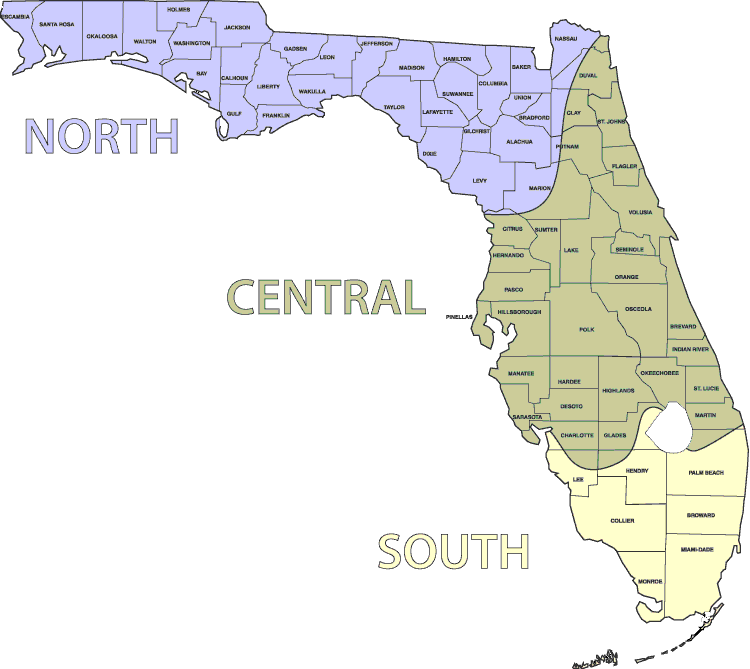
This guide provides information on when to start seeds inside, direct seed, and transplant starter plants in the different regions of Florida.
North USDA Planting Zones: 8b–9a
Central USDA Planting Zones: 9b & some of 10a
South USDA Planting Zones: 10a–11b
Visit the U.S. National Arboretum for an Exact USDA Planting Zone Map.
| Radishes | North Florida | Central Florida | South Florida |
|---|---|---|---|
| Start Seeds Inside | Not recommended | Not recommended | Not recommended |
| Direct Seed | Sep–Mar | Sep–Mar | Oct–Mar |
| Transplant Starter Plants | Not recommended | Not recommended | Not recommended |
Planting Guide – Radishes
Getting Started
Start Seeds Inside:
Starting radish seeds indoors is not recommended because radishes grow quickly and do very well when directly
sown into the garden bed or containers.
Direct Seed:
Direct seeding radishes during the cooler months allows for quick germination and rapid growth, taking
advantage of mild temperatures and shorter days in Florida.
Transplant Starter Plants:
Transplanting radish seedlings is not recommended. Their delicate roots are easily damaged, which can distort
their shape and reduce quality.
Radishes are easy and fast-growing. Thin early and inter-crop them with slower-growing vegetables to save space. Plant every two weeks during the growing season for a continuous harvest.
Soil, Sun, Water, and Spacing
Soil:
Radishes prefer well-drained, fertile, loose soil with a pH between 6.0 and 7.0. Amend the
soil with compost or well-rotted manure to improve fertility and structure and to help roots expand evenly.
Sun:
Full sun to partial shade is ideal for radishes. Aim for at least 4–6 hours of sunlight daily. In warmer
weather, some afternoon shade can help keep roots from becoming hot and bitter.
Watering:
Keep the soil consistently moist but not waterlogged. Even moisture helps radish roots develop quickly without
cracking. Mulching lightly can help regulate soil moisture and temperature.
Spacing:
Plant radish seeds about 1 inch apart in rows spaced roughly 6 inches apart. Once seedlings have a few true
leaves, thin them to 2–3 inches apart so roots have room to size up.
Harvesting and Additional Tips
Harvesting:
Harvest radishes when they reach the desired size and before they become woody or pithy. This is typically
around 20–30 days after planting, when roots are about 1–2 inches in diameter depending on the variety.
Check frequently and harvest promptly for the best flavor and texture.
Additional Tips:
- Radishes grow best in well-drained, loose soil rich in organic matter. Compost improves soil quality and makes it easier for roots to swell.
- Avoid high-nitrogen fertilizers, which can encourage lush leaf growth at the expense of root development.
- Maintain consistent soil moisture during root development to prevent stress-induced cracking and uneven growth.
- Spicy, bitter flavor is often caused by hot weather and over-maturity. Harvest early during warm spells for the mildest taste.
- Use succession planting every 10–14 days during the cool season to keep radishes coming all fall and winter in Florida.
Fertilization, Care, and Problems
Fertilization (N–P–K Ratio):
Radishes benefit from fertilizers with lower nitrogen and higher phosphorus and potassium to support root
development, such as 5-10-10 or 4-8-4.
When to Add:
Before Planting: Apply fertilizer and work it into the top 4–6 inches of soil
before sowing seeds to support strong initial root growth.
Mid-Growing Season: For longer-season or winter radishes, a light side-dressing
partway through the season can help maintain growth, but many fast spring radishes won’t need a second feeding.
Application Tips:
- Always follow the directions on the fertilizer package to avoid over-fertilization.
- Apply fertilizer evenly around the planting area and water thoroughly so nutrients move into the root zone.
Pests and Diseases that Affect Radishes in Florida:
- Flea Beetles: Small beetles that chew tiny “shot holes” in leaves. Heavy damage can slow growth.
- Root Maggots: Larvae that tunnel into roots, causing decay and making radishes inedible.
- Aphids: Small sap-sucking insects that cause leaf curling, yellowing, and can spread viruses.
- Cabbage Root Maggots: Fly larvae that burrow into roots, causing wilting and plant death.
- Downy Mildew: A disease that causes yellow patches on leaves with fuzzy grayish growth underneath.
- Clubroot: A soil-borne disease causing swollen, distorted roots and overall stunted plants.
Blog post on Natural Fertilizers
Natural Pest Control
Companion Plants and Plants to Avoid
Companion Plants:
| Carrot | Carrots are root vegetables that help break up soil, improving aeration and drainage for radishes. They occupy similar space without heavily competing for nutrients when spacing is managed well. |
| Lettuce | Lettuce grows quickly and provides light ground cover that helps keep soil cool and moist around radishes. It has shallow roots and does not compete heavily for nutrients. |
| Marigold | Marigolds release natural compounds that deter nematodes and other soil-borne pests. They also help repel aphids and flea beetles, protecting radish foliage and roots. |
| Nasturtium | Nasturtiums act as a trap crop, drawing aphids and flea beetles away from radishes. Their flowers attract beneficial insects that prey on these pests. |
| Cucumber | Radishes help deter cucumber beetles, which can be harmful to cucumbers. Planting radishes nearby can act as a natural pest barrier for cucumber vines. |
Plants to Avoid Nearby:
| Hyssop | Hyssop is believed to inhibit the growth of radishes and may reduce their vigor when planted too close. |
| Cabbage | Cabbage competes for similar nutrients and attracts many of the same pests (like root maggots and flea beetles), increasing pressure on radish plantings. |
| Cauliflower | Cauliflower is a heavy feeder that competes with radishes for nutrients and water and can attract pests that also attack radishes. |
| Turnips | Turnips occupy the same root zone and compete for nutrients and space. They also share some of the same pests and diseases, making it better to separate them in crop rotation. |