Tropical Sage / Red Salvia (Salvia coccinea)
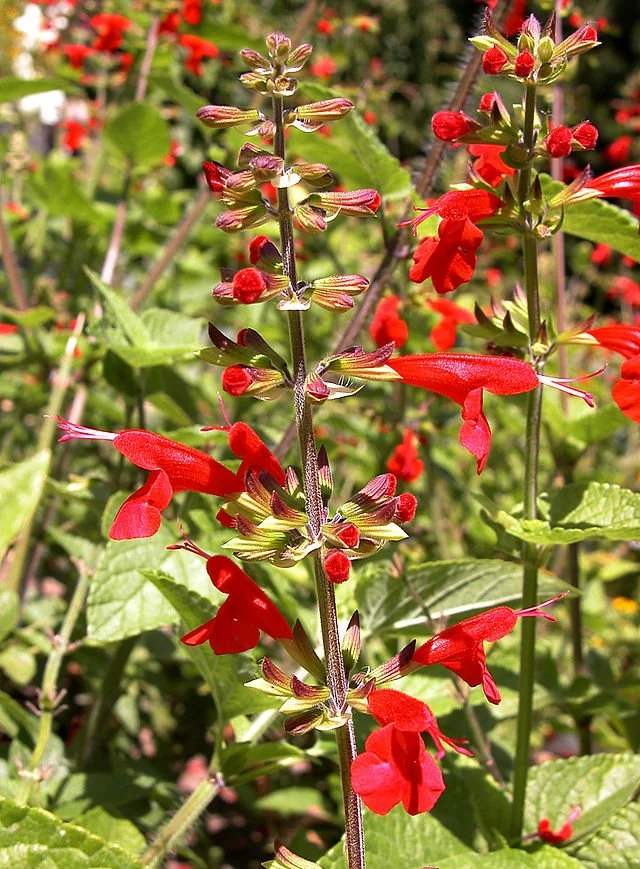
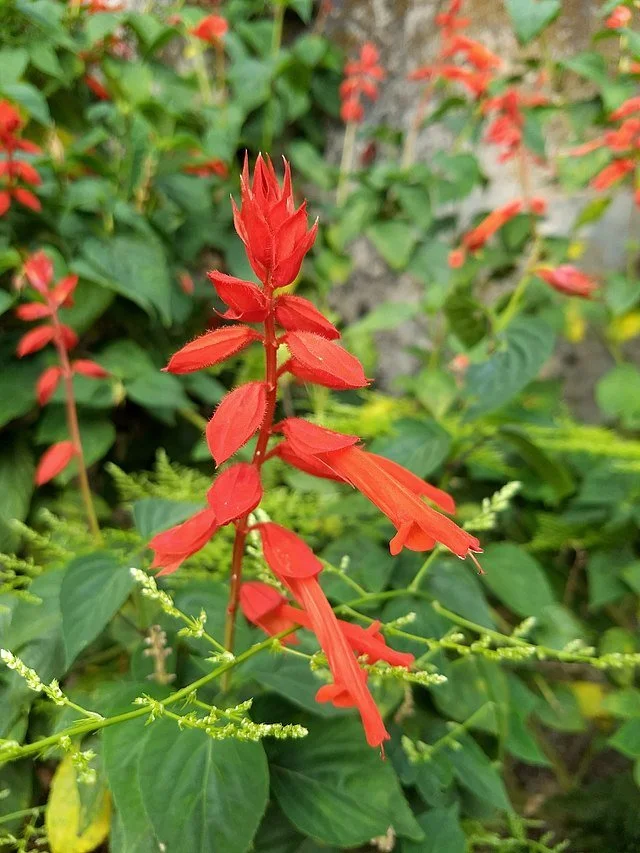
Salvia coccinea, commonly known as Tropical Sage (or Red Salvia), is an enchanting presence in the garden, offering vibrant spikes of blooms in fiery reds, soft pinks, and sometimes white. The flowers form along tall stems above the foliage, delivering a lively display that can continue for long stretches of the warm season.
For gardeners of any experience level, Tropical Sage is especially rewarding because its nectar-rich blossoms are a magnet for hummingbirds, butterflies, and bees. That steady wildlife traffic brings movement and energy to beds and borders, and it makes this plant an easy choice for pollinator-friendly gardens.
While this page references edible flowers, always confirm plant identity and safe use before consumption, and avoid harvesting from plants treated with pesticides.
Any reference to medicinal or culinary use of plants or plant parts should in no way be considered an endorsement by The Ocala Food Forest or its staff. Research is crucial in safe and proper consumption or experimentational use of any plant.
Plant Information
| Scientific Name: | Salvia coccinea |
|---|---|
| Family Name: | Lamiaceae (Mint family) |
| Common Name(s): | Tropical Sage, Scarlet Sage, Blood Sage |
| Size: | 2 to 3 feet tall and 1 to 2 feet wide |
| Plant Type: | Perennial herb; often grown as an annual in cooler climates |
| Origin/Geographic Distribution: | Native to Mexico, Central America, and the southeastern United States |
| Native to: | Mexico and Central America |
| Planted range in the USA: | Commonly planted in southern states such as Florida, Texas, and California |
| Conservation Status: | Not listed as threatened or endangered |
Cultivation
| Planting: | Best planted in spring after the threat of frost has passed |
|---|---|
| Sun Exposure: | Full sun to partial shade |
| Soil Type: | Well-drained, fertile soil; adaptable to various soil types |
| Soil pH: | 6.0 to 7.5 (slightly acidic to neutral) |
| Water Requirements: | Moderate; regular watering to keep soil evenly moist |
| Fertilizer Requirements: | Feed with a balanced fertilizer every 4–6 weeks during the growing season |
| Pruning Requirements: | Prune regularly to encourage bushier growth and more flowers |
| Growth Rate: | Fast |
| Companion Planting: | Complements other drought-tolerant plants and herbs; good companions include lavender and rosemary |
Tolerance and Hardiness
| Drought Tolerance: | Moderate; can withstand short dry periods once established |
|---|---|
| Frost Tolerance: | Limited; tolerates brief light frosts (about 30°F / -1°C to 25°F / -4°C) but needs protection from hard freezes |
| Heat Tolerance: | High; thrives in hot temperatures up to about 90°F to 100°F (32°C to 38°C) |
| Wind Tolerance: | Moderate |
| Salt Tolerance: | Low; not suitable for coastal gardens with direct salt exposure |
| USDA Plant Hardiness Zones: | 7b–11 |
Flower and Fruit Information
| Fruit Type: | Not significant; grown for flowers |
|---|---|
| Harvest Time: | N/A |
| Fruit Description: | N/A |
| Edible Plant: | Yes; the flowers are edible |
| Edible Parts: | Flowers |
| Medicinal: | Not commonly used for medicinal purposes |
| Flower Color: | Bright red (also pink or white in some forms) |
| Flower Shape: | Tubular |
| Fragrance: | Mildly aromatic |
| Flower Bloom Time: | Summer to fall |
| Bloom Duration: | Continues for several months, especially in warm climates |
| Pollination: Self or Other? | Primarily self-pollinating; bees and hummingbirds can enhance pollination |
Wildlife
| Attracts: | Hummingbirds, butterflies, and bees drawn to vivid flowers |
|---|---|
| Pollinators: | Bees, hummingbirds, and butterflies are key pollinators |
| Problematic Pest: | Generally pest-resistant, but can occasionally attract aphids and whiteflies |
Health and Safety
| Toxic: | No; generally considered non-toxic and safe around children and pets |
|---|---|
| Poisonous Parts of Plant: | None |
| Toxic to Humans: | Not toxic |
| Toxic to Animals: | Non-toxic; safe for pets and wildlife |
| Plant Diseases to be aware of: | Watch for fungal diseases in humid conditions; ensure good air circulation |
Companion Planting
For Salvia coccinea (Tropical Sage), companion planting is most effective when you combine plants that share similar light and water needs and collectively support pollinators. Below are Florida Native and Florida Friendly companions that build a vibrant, wildlife-active bed.
Blanket Flower (Gaillardia pulchella) — Florida Native
Benefits: Drought-tolerant blooms that attract a wide range of pollinators.
Use:
- Add bright, continuous color in sunny beds.
- Great for naturalizing and low-maintenance borders.
Blue Porterweed (Stachytarpheta jamaicensis) — Florida Native
Benefits: Strong butterfly and hummingbird attraction; boosts overall pollinator traffic.
Use:
- Use in borders and along paths where its form can spread.
- Pairs well with salvia spikes for layered bloom height.
Coral Honeysuckle (Lonicera sempervirens) — Florida Native
Benefits: A hummingbird-favorite vine that increases nectar availability in the garden.
Use:
- Train on a trellis or fence near Tropical Sage.
- Adds vertical structure behind salvia plantings.
Pentas (Pentas lanceolata) — Florida Friendly
Benefits: Continuous blooms that attract butterflies and hummingbirds.
Use:
- Mix into beds for season-long nectar support.
- Creates strong color contrast with red salvia spikes.
Mexican Heather (Cuphea hyssopifolia) — Florida Friendly
Benefits: Pollinator-friendly filler plant that can act as a soft groundcover layer.
Use:
- Plant along edges to fill gaps and reduce weeding.
- Pairs well with salvia by staying low and tidy.
Golden Dewdrop (Duranta erecta) — Florida Friendly
Benefits: Attracts butterflies and birds; adds height and background structure.
Use:
- Use as a backdrop shrub in mixed borders.
- Creates a layered planting with Tropical Sage in front.