Toilet Paper Plant (Plectranthus barbatus)
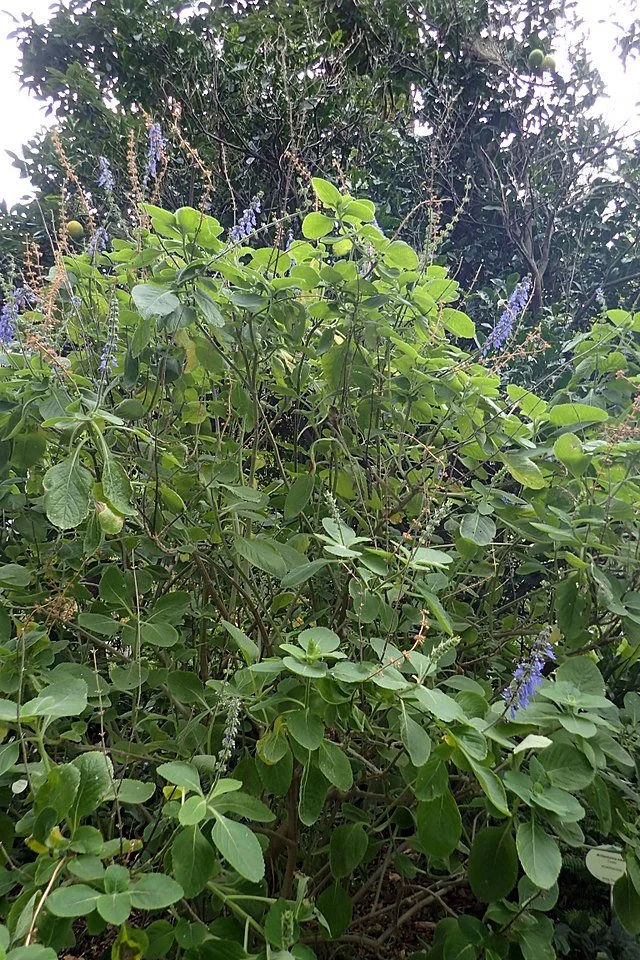
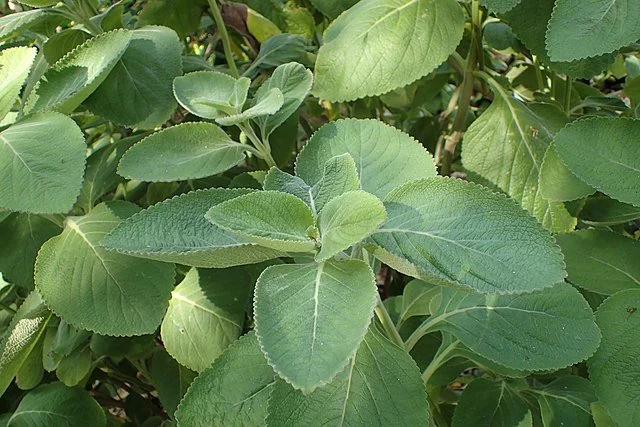
Imagine a plant that not only brings a lush, vibrant touch to your garden but also delights with its understated elegance—the Plectranthus barbatus, also playfully known as the Toilet Paper plant. This evergreen perennial is a treasure from South Africa, renowned for its plush, heart-shaped leaves that gleam with a lively green sheen, sometimes accented with hints of reddish or purple tinges that add a dash of color and intrigue to its appearance.
As you stroll through your garden, Plectranthus barbatus might catch your eye with its clusters of flowers, which emerge like little stars against the backdrop of glossy foliage. They can bloom in favorable conditions with a seasonal peak in late summer or early fall, offering a gentle, aromatic presence when leaves are brushed or crushed.
Tip: In Florida planting zone 9, this plant is often happiest with bright light, warm temperatures, and soil that drains well.
Any reference to medicinal or culinary use of plants or plant parts should in no way be considered an endorsement by The Ocala Food Forest or its staff. Research is crucial in safe and proper consumption or experimentational use of any plant.
Plant Information
| Scientific Name: | Plectranthus barbatus |
|---|---|
| Family Name: | Lamiaceae (Mint family) |
| Common Name(s): | Toilet Paper Plant, Forskolin, Indian Coleus |
| Size: | Typically grows 4 to 8 feet tall and wide |
| Plant Type: | Perennial herb (often grown as an annual in cooler climates) |
| Origin/Geographic Distribution: | Native to the subtropical and tropical regions of India and East Africa |
| Native to: | India, East Africa |
| Planted range in the USA: | Commonly grown in USDA Zones 9–11; used as a container plant in other zones |
| Conservation Status: | Not listed as threatened or endangered |
Cultivation
| Planting: | Best planted in spring after the threat of frost has passed |
|---|---|
| Sun Exposure: | Full sun to partial shade |
| Soil Type: | Well-drained, fertile soil |
| Soil pH: | 6.0 to 7.0 (slightly acidic to neutral) |
| Water Requirements: | Moderate; requires consistent moisture but not waterlogged |
| Fertilizer Requirements: | Feed with a balanced, all-purpose fertilizer every 4–6 weeks during the growing season. |
| Pruning Requirements: | Pinch back tips to promote bushier growth and prevent legginess |
| Growth Rate: | Fast |
| Companion Planting: | Benefits from being planted with other moisture-loving plants such as impatiens and ferns in shaded garden areas |
Tolerance and Hardiness
| Drought Tolerance: | Low; does not tolerate drought well |
|---|---|
| Frost Tolerance: | Low; sensitive to frost and requires protection in cooler weather (about 30°F to 25°F / -1°C to -4°C) |
| Heat Tolerance: | Good; can handle about 90°F to 95°F (32°C to 35°C) |
| Wind Tolerance: | Moderate |
| Salt Tolerance: | Low; not suitable for direct coastal exposure |
| USDA Plant Hardiness Zones: | 9–11 |
Flower and Fruit Information
| Fruit Type: | Small, nutlet-like fruit |
|---|---|
| Harvest Time: | Fruit typically matures in late fall |
| Fruit Description: | Non-descript; not typically a feature of ornamental interest |
| Edible Plant: | No, typically not used for culinary purposes |
| Edible Parts: | N/A |
| Medicinal: | Has been used in traditional medicine, particularly for its root extract known as forskolin which is thought to have various health benefits. The active compound forskolin can interact with other medications and has potential side effects, so professional advice is crucial. |
| Flower Color: | Vibrant blue to purple |
| Flower Shape: | Spiky, tubular flowers |
| Fragrance: | Mildly aromatic, especially the leaves when crushed |
| Flower Bloom Time: | Summer |
| Bloom Duration: | Several weeks during the peak of summer |
| Pollination: Self or Other? | Often self-pollinates; bees and butterflies can aid in pollination |
Wildlife
| Attracts: | Bees and butterflies are commonly attracted to the flowers for their nectar |
|---|---|
| Pollinators: | Bees and butterflies, providing nectar during the blooming period |
| Problematic Pest: | Generally pest-resistant but may occasionally suffer from aphids and spider mites. |
Health and Safety
| Toxic: | Use caution around pets and small children. Even “non-toxic” garden plants can cause stomach upset if chewed or swallowed, and sensitivities can vary by individual. |
|---|---|
| Poisonous Parts of Plant: | None commonly used; avoid experimenting with plant parts |
| Toxic to Humans: | Not typically considered toxic, but ingestion/supplement-style use (forskohlin) should only be done with qualified guidance |
| Toxic to Animals: | Discourage pets/livestock from chewing; consult a veterinarian if ingestion causes symptoms |
| Plant Diseases to be aware of: | Can be prone to leaf spot and root rot in overly moist conditions; improve airflow and avoid overwatering |
Companion Planting
For Plectranthus barbatus (Toilet Paper Plant), companions work best when they share similar moisture and light preferences, add layered texture, and boost pollinator activity—without crowding the plant’s base.
Beautyberry (Callicarpa americana)
Benefits: Produces vibrant purple berries that contrast beautifully and attract birds.
Use:
- Ideal for background planting, especially in shaded garden areas.
- Creates a colorful, wildlife-friendly layer behind the main planting.
Wild Coffee (Psychotria nervosa)
Benefits: Dense, evergreen foliage complements and provides habitat for local wildlife.
Use:
- Works well alongside in shaded or semi-shaded areas.
- Use as a backdrop to make the glossy foliage stand out.
Blue Porterweed (Stachytarpheta jamaicensis)
Benefits: Attracts numerous pollinators, enhancing garden biodiversity.
Use:
- Excellent for front border placements to add height and color contrast.
- Use to increase pollinator traffic around the planting area.
Saw Palmetto (Serenoa repens)
Benefits: Strong structure and wildlife value (berries and cover).
Use:
- Use as a low-maintenance anchor plant in a naturalistic design.
- Place behind or off to the side for layered texture.
Cocoplum (Chrysobalanus icaco)
Benefits: Dense foliage; edible fruits that attract birds and wildlife.
Use:
- Great for hedge or background plantings that require little care.
- Use to create a green wall effect in semi-shade.
Muhly Grass (Muhlenbergia capillaris)
Benefits: Fall pink-purple plumes add strong seasonal texture and color.
Use:
- Adds movement and contrast behind broader-leaved companions.
- Use as a texture “buffer” between shrubs and perennials.
Pentas (Pentas lanceolata)
Benefits: Continuous blooms attract butterflies and hummingbirds.
Use:
- Plant alongside or in front for a reliable color band.
- Helps keep pollinators working the area while flowers are open.
Coleus (Solenostemon scutellarioides)
Benefits: Colorful foliage contrasts with green leaves and adds depth.
Use:
- Use in partial shade to create a layered “foliage tapestry.”
- Great for containers near the main planting.
Lantana (Lantana camara)
Benefits: Robust bloomer that attracts a wide range of pollinators.
Use:
- Place in brighter sun pockets nearby to pull pollinators in.
- Use as a border plant where it won’t shade the main plant.
Verbena (Verbena spp.)
Benefits: Long-lasting blooms; can help fill open spaces with color.
Use:
- Use to edge beds and soften transitions between plant groups.
- Supports pollinators with frequent flowering.
Agapanthus (Agapanthus spp.)
Benefits: Tall blooms add height and structure behind lower plants.
Use:
- Plant behind or among for a clean, upright accent.
- Helps break up masses of foliage with vertical lines.
Salvia (Salvia spp.)
Benefits: Strong pollinator attraction; adds spikes of color and movement.
Use:
- Place near the planting to increase beneficial insect activity.
- Use as a mid-layer between groundcovers and shrubs.