Tickseed (Coreopsis leavenworthii)
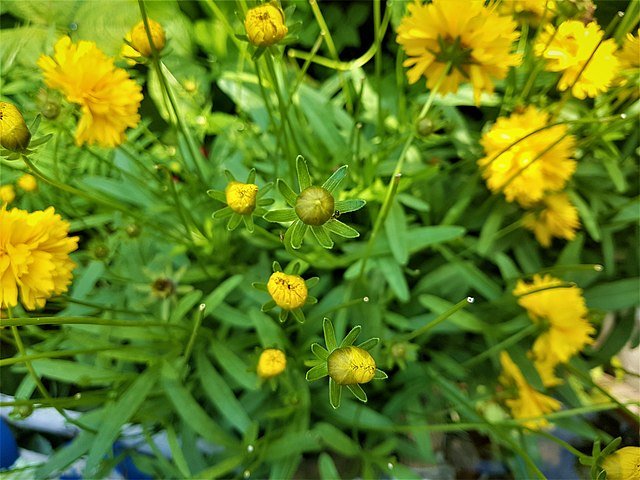
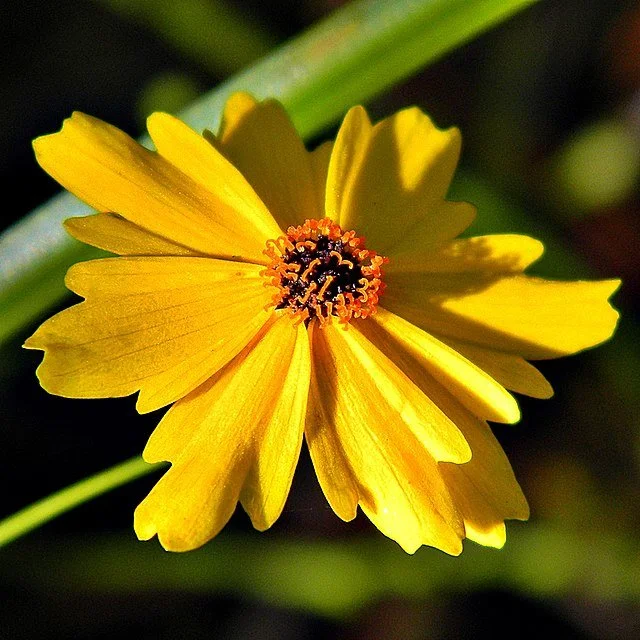
Imagine a burst of sunshine in your garden, even on the cloudiest days—this is the charm of Coreopsis leavenworthii, commonly known as Leavenworth’s Tickseed. Native to Florida, this cheerful wildflower lifts a landscape with bright, daisy-like blooms that read as pure, open-color from a distance and reward a closer look with delicate detail.
Tickseed is more than a pretty face. In bloom, it turns a planting into a pollinator hotspot—bees and butterflies work the flowers steadily, bringing movement and life to beds, borders, and naturalized areas. Tucked among grasses or used as a sunny accent in a garden space, it carries the easy, wild spirit Florida is known for.
State Wildflower of Florida: Tickseed (Coreopsis) is Florida’s official state wildflower (genus designation).
Any reference to medicinal or culinary use of plants or plant parts should in no way be considered an endorsement by The Ocala Food Forest or its staff. Research is crucial in safe and proper consumption or experimentational use of any plant.
Plant Information
| Scientific Name: | Coreopsis leavenworthii |
|---|---|
| Family Name: | Asteraceae (Aster family) |
| Common Name(s): | Leavenworth’s Tickseed, Tickseed |
| Size: | Typically grows 1 to 3 feet tall |
| Plant Type: | Annual wildflower |
| Origin/Geographic Distribution: | Native to Florida; found widely throughout the state |
| Native to: | Florida |
| Planted range in the USA: | Widely planted in Florida; used in warm-region wildflower plantings |
| Conservation Status: | Not listed as threatened or endangered |
Cultivation
| Planting: | Best planted in spring to establish before the heat of summer |
|---|---|
| Sun Exposure: | Full sun to partial shade |
| Soil Type: | Prefers well-drained sandy soils but adapts to a range of soil conditions |
| Soil pH: | 5.5 to 7.7 (slightly acidic to neutral) |
| Water Requirements: | Moderate; performs best with consistent moisture during establishment |
| Fertilizer Requirements: | Low; benefits from a light application of a general-purpose fertilizer at the onset of the growing season. |
| Pruning Requirements: | Deadheading spent blooms can encourage additional flowering |
| Growth Rate: | Fast; quickly fills in spaces and readily self-seeds in suitable conditions |
| Companion Planting: | Pairs well with other native wildflowers for a vibrant, naturalized landscape |
Tolerance and Hardiness
| Drought Tolerance: | Moderate; more reliable bloom with regular moisture |
|---|---|
| Frost Tolerance: | Moderate; can withstand light frosts but may die back (often reseeds) |
| Heat Tolerance: | Excellent; can thrive in high heat when moisture is adequate |
| Wind Tolerance: | Moderate |
| Salt Tolerance: | Moderate; suitable for coastal areas away from direct salt spray |
| USDA Plant Hardiness Zones: | 8–11 |
Flower and Fruit Information
| Fruit Type: | Small dry seed (achene) |
|---|---|
| Harvest Time: | Not typically harvested; seeds mature in late summer to fall |
| Fruit Description: | Small, inconspicuous |
| Edible Plant: | No, not recognized for edible purposes |
| Edible Parts: | N/A |
| Medicinal: | No significant medicinal uses are known |
| Flower Color: | Bright yellow |
| Flower Shape: | Daisy-like, with numerous rays surrounding a central disk |
| Fragrance: | Mildly fragrant, attracting pollinators |
| Flower Bloom Time: | Spring through early fall |
| Bloom Duration: | Long-lasting display throughout the growing season |
| Pollination: Self or Other? | Attracts a variety of pollinators, primarily bees |
Wildlife
| Attracts: | Bees, butterflies, and other pollinators |
|---|---|
| Pollinators: | Bees and butterflies are particularly drawn to the flowers |
| Problematic Pest: | Generally pest-resistant; may occasionally suffer from aphids. |
Health and Safety
| Toxic: | No, Coreopsis leavenworthii is not toxic and is generally considered safe around children and pets |
|---|---|
| Poisonous Parts of Plant: | None known |
| Toxic to Humans: | Not toxic |
| Toxic to Animals: | Non-toxic; safe for pets and wildlife |
| Plant Diseases to be aware of: | Can be susceptible to powdery mildew and rust in overly moist conditions; ensure good air circulation |
Companion Planting
For Coreopsis leavenworthii (Leavenworth’s Tickseed), choosing the right companion plants can enhance both the visual impact of your planting and the ecological activity around it. Here are Florida Native and Florida Friendly options, with zone range, benefits, and best use ideas.
Florida Native: Gaillardia pulchella (Blanket Flower)
Zone Range: 8–11
Benefits: Strong color contrast; highly attractive to pollinators.
Use: Plant alongside Tickseed for a bold, sun-loving wildflower mix.
Florida Native: Salvia coccinea (Scarlet Sage)
Zone Range: 8–10
Benefits: Red blooms bring hummingbirds and butterflies into the same space.
Use: Place in front or intermix for high-contrast color and constant activity.
Florida Native: Asclepias tuberosa (Butterfly Weed)
Zone Range: 4–10
Benefits: Host plant for monarchs; boosts biodiversity.
Use: Combine in full sun for a butterfly-focused planting pocket.
Florida Native: Rudbeckia hirta (Black-eyed Susan)
Zone Range: 3–10
Benefits: Adds height and structure; supports pollinators and birds.
Use: Use as a backdrop behind Tickseed for layered bloom height.
Florida Native: Muhlenbergia capillaris (Pink Muhly Grass)
Zone Range: 6–11
Benefits: Texture contrast and fall color; supports beneficial habitat.
Use: Plant behind/around Tickseed for a meadow look with seasonal drama.
Florida Friendly: Lantana camara (Lantana)
Zone Range: 8–11
Benefits: Long bloom season; attracts butterflies and hummingbirds.
Use: Edge plantings where you want steady color around Tickseed.
Florida Friendly: Verbena bonariensis (Tall Verbena)
Zone Range: 7–11
Benefits: Adds airy height; strong butterfly magnet.
Use: Plant behind Tickseed to add vertical interest without heaviness.
Florida Friendly: Pentas lanceolata (Pentas)
Zone Range: 8–11
Benefits: Starry blooms feed pollinators for long stretches.
Use: Mix through the front half of the bed to keep color dense and continuous.
Florida Friendly: Stachytarpheta jamaicensis (Blue Porterweed)
Zone Range: 9–11
Benefits: Continuous bloom; excellent butterfly and hummingbird plant.
Use: Use as a nearby anchor plant to keep the pollinator traffic high.
Group companions by sun exposure first, then by irrigation needs. For the cleanest look, mass Tickseed in drifts and use one or two taller companions behind it for structure, with a few long-blooming nectar plants threaded through to keep pollinators present beyond peak Tickseed bloom.