River Oats (Chasmanthium latifolium)
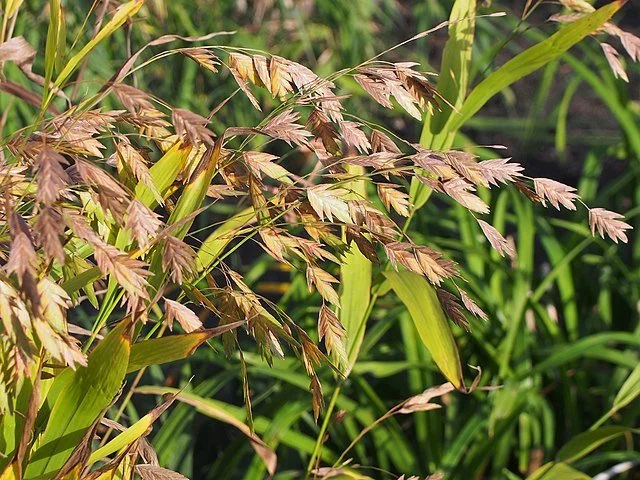
River Oats, Chasmanthium latifolium, is an easy, shade-tolerant native grass that adds movement, texture, and a distinctive “oat-like” seed display to garden beds. The foliage stays attractive through the growing season and shifts color as the year progresses, while the dangling seed heads bring structure from late summer well into winter.
This plant is a strong choice for woodland edges, along fence lines, and in naturalistic borders where you want a reliable perennial that can handle a wide range of soils as long as moisture is reasonably steady. It is especially useful for softening transitions between open lawn and shaded planting zones.
Seed heads persist into winter and are often used in dried arrangements; birds also make use of the seeds and the plant’s cover.
Any reference to medicinal or culinary use of plants or plant parts should in no way be considered an endorsement by The Ocala Food Forest or its staff. Research is crucial in safe and proper consumption or experimentational use of any plant.
Plant Information
| Scientific Name: | Chasmanthium latifolium |
|---|---|
| Family Name: | Poaceae |
| Common Name(s): | River Oats, Northern Sea Oats, Inland Sea Oats |
| Size: | 2 to 4 feet tall and 1 to 2 feet wide |
| Plant Type: | Perennial grass |
| Origin/Geographic Distribution: | Native to the United States; found in woods, meadows, and along streams |
| Native to: | Eastern North America |
| Native range in the USA: | Widespread across Eastern and Central United States |
| Conservation Status: | Not listed as threatened or endangered |
Cultivation
| Planting: | Spring or fall |
|---|---|
| Sun Exposure: | Full sun to partial shade |
| Soil Type: | Adaptable; prefers moist, well-drained soil |
| Soil pH: | 6.0–8.0 |
| Water Requirements: | Medium to high; prefers consistent moisture |
| Fertilizer Requirements: | Low; apply a balanced fertilizer annually in spring |
| Pruning Requirements: | Cut back in late winter to early spring before new growth begins |
| Growth Rate: | Moderate to fast |
| Companion Planting: | Complements native wildflowers and ferns for naturalistic garden designs |
Tolerance and Hardiness
| Drought Tolerance: | Moderate |
|---|---|
| Frost Tolerance: | High; can handle temperatures as low as -20°F (-29°C) |
| Heat Tolerance: | Moderate to high; can handle up to about 95°F (35°C) |
| Wind Tolerance: | Moderate |
| Salt Tolerance: | Low |
| USDA Plant Hardiness Zones: | 4–9 |
Flower and Fruit Information
| Fruit Type: | Seed heads |
|---|---|
| Harvest Time: | Seed heads mature in late summer and persist through winter |
| Fruit Description: | Attractive, flat, oat-like seed heads that hang from arching stems |
| Edible Plant: | Yes (seed heads) |
| Edible Parts: | Only the seed heads |
| Edible Use Notes: | Seeds can be cleaned and cooked or roasted. They are sometimes used like a small grain (similar to “oatmeal”), added to soups/salads, ground into flour for baking, or roasted for a snack. Clean thoroughly before use. |
| Medicinal: | No known medicinal uses |
| Flower Color: | Greenish to straw-colored |
| Flower Shape: | Small, inconspicuous |
| Fragrance: | None |
| Flower Bloom Time: | Mid-summer to fall |
| Bloom Duration: | Approximately 4–6 weeks |
| Pollination: Self or Other? | Wind-pollinated |
Wildlife
| Attracts: | Birds (seed and cover); also supports a variety of garden insects; bees and butterflies may visit nearby plantings |
|---|---|
| Pollinators: | Not applicable; wind-pollinated |
| Problematic Pest: | Aphids, spider mites, mealybugs, thrips, leaf miners, sawflies, caterpillars, slugs/snails, and cutworms |
Health and Safety
| Toxic: | No; safe around children and pets |
|---|---|
| Poisonous Parts of Plant: | None |
| Toxic to Humans: | Not toxic |
| Toxic to Animals: | Non-toxic; safe for wildlife and domestic animals |
| Plant Diseases to be aware of: | Generally disease-resistant; watch for leaf spotting and powdery mildew |
Companion Planting
For Chasmanthium latifolium (River Oats), companions work best when they share similar light and moisture needs. River Oats shines in woodland edges and streamside-style plantings, where layered textures and mixed heights create a natural look while supporting wildlife.
Black-eyed Susan (Rudbeckia hirta)
Benefits: Bright, pollinator-friendly blooms add color contrast and support beneficial insects.
Use:
- Plant in sunny openings near River Oats.
- Use in drifts for a meadow-to-woodland transition.
Coneflower (Echinacea spp.)
Benefits: Supports pollinators and birds; adds sturdy upright structure next to arching seed heads.
Use:
- Plant behind or beside River Oats for height layering.
- Use as a repeating “anchor” in mixed borders.
Lady Fern (Athyrium filix-femina)
Benefits: Lush foliage contrasts with oat-like seed heads and helps keep soil cooler and moister.
Use:
- Ideal for partial shade and woodland beds.
- Plant in clusters at the base/edges of River Oats clumps.
Christmas Fern (Polystichum acrostichoides)
Benefits: Evergreen texture in many sites; complements River Oats through seasonal changes.
Use:
- Use as a stable backdrop in shady borders.
- Mix for layered woodland structure.
Hydrangea (Hydrangea spp.)
Benefits: Adds bold leaf mass and seasonal bloom color, creating a strong “shrub + grass” contrast.
Use:
- Plant behind River Oats for depth in borders.
- Keep spacing open for airflow in humid sites.
Sedges & Companion Grasses (Carex spp., others)
Benefits: Reinforces a naturalistic theme while providing habitat value and ground-level texture.
Use:
- Blend multiple textures for a woodland meadow effect.
- Match moisture levels to reduce stress and disease pressure.