Purple Lovegrass (Eragrostis spectabilis)
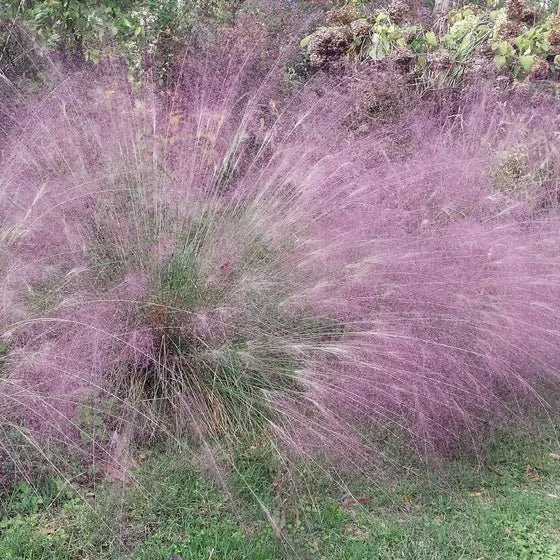
Purple Lovegrass, Eragrostis spectabilis, is a Florida native ornamental grass prized for its fine, arching foliage and airy, purple-pink flower clouds that appear in the warm season. It’s a reliable, low-input plant for sunny, well-drained sites, and it performs especially well in naturalistic plantings, meadow-style beds, and drought-tolerant landscapes.
Once established, it needs little supplemental water and tends to stay well-behaved as a clumping grass. The blooms dry attractively and can add texture well into fall, while the plant’s tough nature makes it a strong choice for busy gardeners who still want seasonal drama.
This is a wind-pollinated grass; flowers are ornamental and the plant is valued primarily for landscape use.
Any reference to medicinal or culinary use of plants or plant parts should in no way be considered an endorsement by The Ocala Food Forest or its staff. Research is crucial in safe and proper consumption or experimentational use of any plant.
Plant Information
| Scientific Name: | Eragrostis spectabilis |
|---|---|
| Family Name: | Poaceae |
| Common Name(s): | Purple Lovegrass |
| Size: | Typically 1–2 feet tall and wide |
| Plant Type: | Perennial clumping grass |
| Origin/Geographic Distribution: | Native to the United States; common in grasslands, roadsides, and open woods (eastern and central regions) |
| Planted range in the USA: | Widely distributed across the Eastern U.S., from Texas to Florida and northward to New England (Florida native) |
| Conservation Status: | Not listed as threatened or endangered |
Cultivation
| Planting: | Best planted in early spring or fall |
|---|---|
| Sun Exposure: | Full sun to part shade |
| Soil Type: | Prefers well-drained sandy or loamy soil; adaptable to many soils, including poor soils |
| Soil pH: | 4.0 to 7.5 (acidic to neutral) |
| Water Requirements: | Drought tolerant once established; requires minimal watering |
| Fertilizer Requirements: | Low; can benefit from a light application of a balanced fertilizer in spring |
| Pruning Requirements: | Cut back in late winter to early spring to encourage fresh growth |
| Growth Rate: | Fast; fills in to form a dense clump/mat under good conditions |
| Companion Planting: | Pairs well with native wildflowers and other drought-tolerant grasses for meadow and restoration plantings |
Tolerance and Hardiness
| Drought Tolerance: | High; well-suited for xeriscaping and low-water garden areas |
|---|---|
| Frost Tolerance: | High; capable of withstanding winter temperatures down to about 10°F (-12°C) |
| Heat Tolerance: | High; thrives in hot summers 95°F (35°C) or higher |
| Wind Tolerance: | Moderate; handles wind but may benefit from some shelter in very exposed sites |
| Salt Tolerance: | Moderate; suitable for coastal areas with protection from direct salt spray |
| USDA Plant Hardiness Zones: | 4–11 |
Flower and Fruit Information
| Fruit Type: | Produces small, inconspicuous seeds |
|---|---|
| Harvest Time: | Late summer to fall |
| Fruit Description: | Small seeds are not typically harvested for use |
| Edible Plant: | No |
| Edible Parts: | None |
| Medicinal: | No known significant medicinal uses |
| Flower Color: | Purple |
| Flower Shape: | Small, open, airy panicles |
| Fragrance: | Not fragrant |
| Flower Bloom Time: | Mid-summer to early fall |
| Bloom Duration: | Several weeks |
| Pollination: Self or Other? | Self-pollinated by wind |
Wildlife
| Attracts: | Provides habitat and food sources for beneficial insects; can serve as a host plant for some butterfly species. Also attracts ladybugs and parasitic wasps. |
|---|---|
| Pollinators: | Primarily wind-pollinated; may still support visiting insects such as bees and hoverflies |
| Problematic Pest: | Generally pest-free; robust growth keeps most pests at bay |
Health and Safety
| Toxic: | No; safe around children and pets |
|---|---|
| Poisonous Parts of Plant: | None |
| Toxic to Humans: | Not toxic |
| Toxic to Animals: | Non-toxic; safe for wildlife and domestic animals |
| Plant Diseases to be aware of: | Generally robust; watch for rust and powdery mildew in overly moist conditions |
Companion Planting
For Eragrostis spectabilis (Purple Lovegrass), companions work best when they share full-sun, well-drained conditions and support pollinators and beneficial insects. Pairing it with drought-tolerant natives creates a resilient, meadow-style planting that looks intentional and stays low-maintenance.
Black-eyed Susan (Rudbeckia hirta)
Benefits: Bright yellow blooms contrast with the purple haze of lovegrass and draw pollinators.
Use:
- Plant in drifts for a meadow look.
- Use as a color “pop” in sunny borders.
Blazing Star (Liatris spicata)
Benefits: Upright purple spikes add vertical structure and support butterflies and bees.
Use:
- Group behind or beside lovegrass for height layering.
- Mix in clusters for a prairie-style bed.
Salvia (Salvia spp.)
Benefits: Drought-tolerant blooms provide long-season nectar; upright form complements lovegrass.
Use:
- Place in back/middle of borders to frame lovegrass clumps.
- Use as a repeating “spike” element for structure.
Coreopsis (Coreopsis spp.)
Benefits: Cheerful daisy blooms brighten the planting and support beneficial insects.
Use:
- Plant toward the front edge of a border.
- Use as a sunny filler between grass clumps.
Yarrow (Achillea millefolium)
Benefits: Attracts beneficial insects and pairs well with low-water, full-sun beds.
Use:
- Use in mixed borders and rock gardens.
- Keep as a pollinator strip near lovegrass plantings.
Other Native Grasses (mixed)
Benefits: Creates a cohesive meadow aesthetic and improves habitat value.
Use:
- Blend multiple grass textures for season-long interest.
- Keep spacing for airflow to reduce mildew risk.