Passion Fruit (Passiflora edulis)
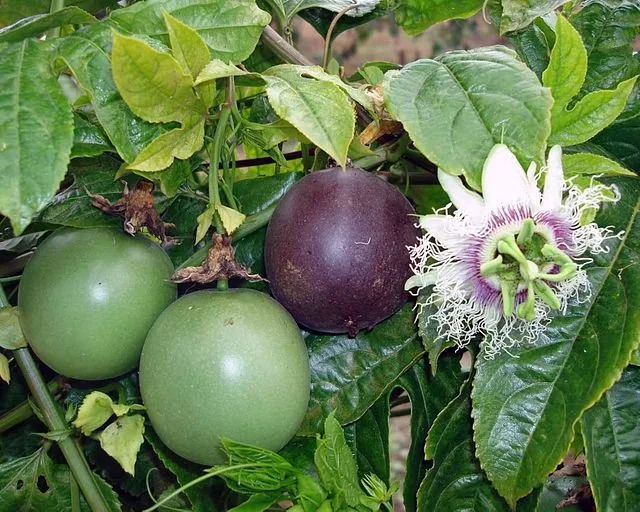
Passion Fruit, Passiflora edulis, is a fast-growing, perennial fruiting vine that brings bold tropical flowers and a uniquely flavored harvest to warm-climate gardens. With a sturdy trellis and consistent moisture, it can quickly cover a support and produce fruit in-season.
In Florida planting zone 9, this vine performs best with bright light and good drainage. Flowering is impressive, but reliable fruit set depends heavily on pollination—healthy pollinator activity (especially larger bees) or occasional hand pollination can make a noticeable difference in yields.
Tip: Planting two vines (or two compatible selections) can improve pollination and increase harvests.
Any reference to medicinal or culinary use of plants or plant parts should in no way be considered an endorsement by The Ocala Food Forest or its staff. Research is crucial in safe and proper consumption or experimentational use of any plant.
Varieties Suitable for Florida
Purple Passion Fruit (Passiflora edulis)
- Fruiting Season: Early summer through early fall
- Pollination: Often benefits from cross-pollination; fruit set may be reduced if pollination is limited
- Best Pollinators: Large bees (especially carpenter bees) or hand pollination
- Planting Zone Range: 9–11 (best in the warmer parts of Zone 9)
- Description: Produces round to oval fruits with a tough rind and aromatic, seed-filled pulp with a sweet-tart flavor.
Yellow Passion Fruit (Passiflora edulis f. flavicarpa)
- Fruiting Season: Late spring through fall (often longer in warm sites)
- Pollination: Typically requires cross-pollination for strong production
- Best Pollinators: Large bees or hand pollination
- Planting Zone Range: 9–11
- Description: Larger yellow fruits, generally more acidic than purple; often performs well in warm, humid conditions.
Sweet Granadilla (Passiflora ligularis)
- Fruiting Season: Summer through fall
- Pollination: Requires cross-pollination; hand pollination can improve yields
- Best Pollinators: Bees; hand pollination as needed
- Planting Zone Range: 9–11 (provide protection during cooler events)
- Description: Round orange fruits with a hard shell and sweet, aromatic pulp.
Plant Information
| Scientific Name: | Passiflora edulis |
|---|---|
| Family Name: | Passifloraceae |
| Common Name(s): | Passion Fruit, Passion Fruit Vine, Purple Granadilla |
| Size: | Vine length commonly 15–30 feet (on a trellis/support) |
| Plant Type: | Vine, Perennial |
| Origin/Geographic Distribution: | Native to South America (southern Brazil, Paraguay, northern Argentina) |
| Native to: | Brazil, Paraguay, Argentina |
| Planted range in the USA: | Commonly grown in Florida, Hawaii, and warm parts of California |
| Conservation Status: | Not listed as threatened; manage responsibly where it can spread |
Cultivation
| Planting: | Spring after frost risk; plant where a trellis/support is already in place |
|---|---|
| Sun Exposure: | Full sun (best flowering/fruiting); partial shade tolerated |
| Soil Type: | Rich, well-drained sandy-loam to loamy soil |
| Soil pH: | 5.5 to 7.5 (slightly acidic to neutral) |
| Water Requirements: | Moderate to high; water deeply and consistently, especially during flowering and fruit fill |
| Fertilizer Requirements: | Feed during the growing season with a balanced fertilizer; adjust frequency based on growth and fruiting response |
| Pruning Requirements: | Prune after fruiting to manage size, improve airflow, and encourage healthy new growth |
| Growth Rate: | Fast; can extend several feet in a season once established |
| Companion Planting: | Pairs well with pollinator-attracting plants near (not competing within) the vine’s root zone |
Tolerance and Hardiness
| Drought Tolerance: | Moderate once established; production drops if the plant is allowed to dry repeatedly |
|---|---|
| Frost Tolerance: | Low; protect vines in freeze events (top growth can be damaged by hard freezes) |
| Heat Tolerance: | High; performs well in warm to hot climates with adequate water |
| Wind Tolerance: | Moderate; use a strong trellis and secure training to reduce breakage in storms |
| Salt Tolerance: | Low; avoid direct coastal exposure without protection |
| USDA Plant Hardiness Zones: | 9–12 (best in warmer parts of Zone 9) |
Flower and Fruit Information
| Fruit Type: | Edible fruits (round to oval) |
|---|---|
| Harvest Time: | Summer through fall; harvest when fruit is fully colored and aromatic, and/or when it naturally drops |
| Fruit Description: | Tough rind with juicy, seed-filled pulp; sweet-tart flavor used fresh, in drinks, syrups, desserts, and sauces |
| Edible Plant: | Yes |
| Edible Parts: | Fruit pulp (and seeds as eaten with pulp) |
| Medicinal: | Sometimes used traditionally for calming/relaxation; research and proper guidance are recommended before medicinal use |
| Flower Color: | White petals with purple and blue-toned center structures |
| Flower Shape: | Large, intricate, radial blooms typical of Passiflora |
| Fragrance: | Mildly fragrant |
| Flower Bloom Time: | Spring through summer (peak bloom varies by site) |
| Bloom Duration: | Individual flowers are short-lived, but blooming continues through the season in warm weather |
| Pollination: Self or Other? | Often needs strong pollinator activity; cross-pollination can significantly improve fruit set |
Wildlife
| Attracts: | Bees and butterflies during bloom; birds may visit the area around fruiting vines |
|---|---|
| Pollinators: | Large bees (especially carpenter bees), honeybees, and other native bees |
| Problematic Pest: | Common issues can include caterpillars (including passion-vine feeders) and fruit pests that affect ripening fruit |
Health and Safety
| Toxic: | No (fruit is edible) |
|---|---|
| Poisonous Parts of Plant: | None commonly consumed; avoid experimenting with non-fruit plant parts without reliable guidance |
| Toxic to Humans: | Not toxic when fruit is eaten ripe and properly handled |
| Toxic to Animals: | Generally considered non-toxic; discourage pets/livestock from chewing vines and unripe fruit to avoid stomach upset |
| Plant Diseases to be aware of: | Fungal and leaf-spot issues can occur in humid conditions; improve airflow and avoid wet foliage overnight |
Companion Planting
For Passiflora edulis (Passion Fruit), companions are most helpful when they boost pollinator traffic, support beneficial insects, and reduce pest pressure—without competing heavily at the vine’s root zone.
Firebush (Hamelia patens)
Benefits: Strong nectar source that brings in pollinators and beneficial insects (Florida native).
Use:
- Plant near (not under) the vine’s main root area.
- Use as a pollinator “beacon” to increase garden activity.
Coral Honeysuckle (Lonicera sempervirens)
Benefits: Supports hummingbirds and pollinators; adds layered bloom nearby (Florida native).
Use:
- Train on a separate support to avoid vine tangling.
- Use to broaden the flowering window in the area.
Pentas (Pentas lanceolata)
Benefits: Excellent butterfly magnet; increases pollinator presence (Florida-friendly).
Use:
- Plant as a border around the trellis zone.
- Keeps pollinators working the area during bloom season.
Marigolds (Tagetes spp.)
Benefits: Helps attract beneficial insects; may reduce some pest pressure (Florida-friendly annual).
Use:
- Plant at the edges of the vine bed, not directly at the crown.
- Replant seasonally for continuous coverage.
Basil (Ocimum basilicum)
Benefits: Draws pollinators when flowering; useful companion aroma in mixed beds (Florida-friendly annual).
Use:
- Grow in a nearby strip or containers beside the trellis.
- Let some plants flower to support beneficial insects.
Native Wildflowers (local mix)
Benefits: Increases biodiversity and brings in predatory/parasitoid insects that help with pests.
Use:
- Plant a sunny pollinator strip near the vine area.
- Keep the vine base open for airflow and inspection.