Mango (Mangifera indica)
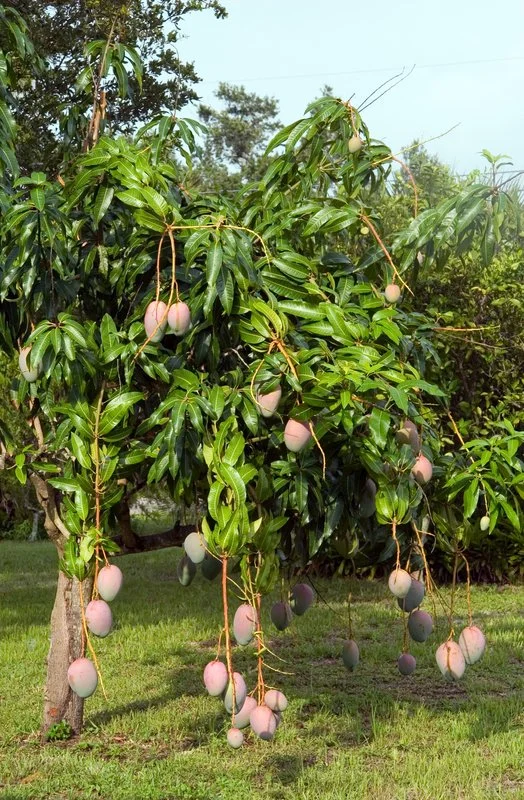
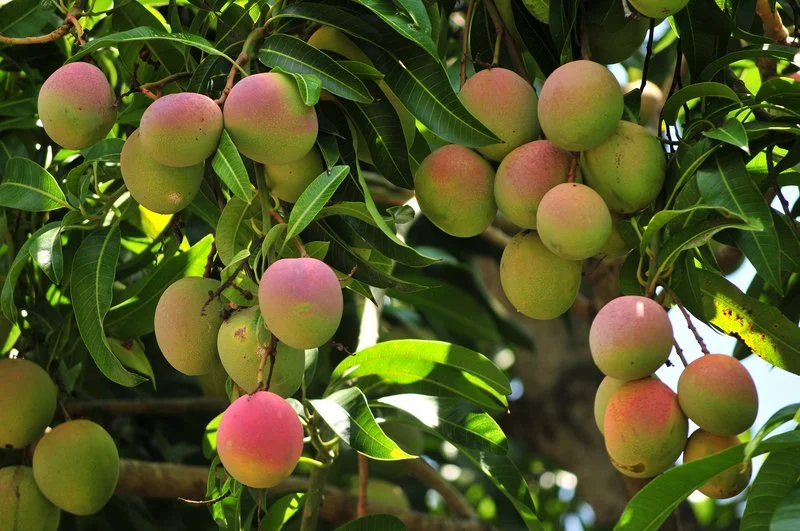
Mango (Mangifera indica) is a tropical fruit tree known for its lush canopy, glossy green leaves, and the unmistakable promise of sweet fruit in warm climates. When established, it becomes a true landscape centerpiece, offering shade, structure, and seasonal interest.
From late winter into early spring, mango trees produce large panicles of tiny, pale flowers that set the stage for fruit development. As fruit matures, it often shifts from green to yellow, orange, and sometimes red blush tones, with rich, juicy flesh that’s enjoyed fresh and in countless recipes.
Mango is best suited to very warm sites and benefits from protection from cold snaps, especially while young.
Any reference to medicinal or culinary use of plants or plant parts should in no way be considered an endorsement by The Ocala Food Forest or its staff. Research is crucial in safe and proper consumption or experimentational use of any plant.
Plant Information
| Scientific Name: | Mangifera indica |
|---|---|
| Family Name: | Anacardiaceae (Cashew family) |
| Common Name(s): | Mango |
| Size: | Can grow 30–100 feet tall (variety and pruning determine mature size) |
| Plant Type: | Tropical perennial tree |
| Origin/Geographic Distribution: | Native to South Asia; widely cultivated in tropical and subtropical regions |
| Native to: | India and Southeast Asia |
| Planted range in the USA: | Florida, California, and Hawaii (warm microclimates) |
| Conservation Status: | Not listed as threatened or endangered |
Cultivation
| Planting: | Spring to early summer (to establish before cooler weather) |
|---|---|
| Sun Exposure: | Full sun |
| Soil Type: | Rich, well-drained sandy loam |
| Soil pH: | 5.5 to 7.5 (slightly acidic to neutral) |
| Water Requirements: | Moderate; steady moisture while establishing and during fruiting |
| Fertilizer Requirements: | Higher feeding needs during active growth; balanced fertilizer (N-P-K) is commonly used during the growing season |
| Pruning Requirements: | Annual pruning to manage size, remove dead wood, and encourage productive structure |
| Growth Rate: | Fast when young in ideal warmth and moisture |
| Companion Planting: | Works well in a diverse tropical orchard with other fruit trees and supportive understory plants |
Tolerance and Hardiness
| Drought Tolerance: | Moderate once established; consistent moisture improves flowering and fruit quality |
|---|---|
| Frost Tolerance: | Low; young trees are vulnerable. Damage can occur around 30°F to 25°F (-1°C to -4°C) |
| Heat Tolerance: | High; can handle 100–104°F (38–40°C) with adequate water |
| Wind Tolerance: | Moderate; protect from strong winds that can break branches and scar fruit |
| Salt Tolerance: | Low; avoid direct coastal exposure without protection |
| USDA Plant Hardiness Zones: | 10–11 |
Flower and Fruit Information
| Fruit Type: | Fleshy drupe; size and shape vary by variety |
|---|---|
| Harvest Time: | Typically summer (varies by variety and local climate) |
| Fruit Description: | Sweet and juicy with a fibrous pit; skin ranges green/yellow/orange/red depending on variety and ripeness |
| Edible Plant: | Yes |
| Edible Parts: | Fruit flesh (commonly eaten fresh, dried, or processed) |
| Medicinal: | Traditional uses exist for leaves/bark in some cultures (research is essential before any use) |
| Flower Color: | Small white to pale yellow flowers in large panicles |
| Flower Shape: | Small, star-shaped |
| Fragrance: | Mildly fragrant; attracts pollinators |
| Flower Bloom Time: | Late winter to early spring (climate dependent) |
| Bloom Duration: | Several weeks |
| Pollination: Self or Other? | Variety dependent; many set fruit with bee activity, and some benefit from cross-pollination |
Wildlife
| Attracts: | Bees and other pollinators during bloom; birds may visit during fruiting |
|---|---|
| Pollinators: | Bees are primary pollinators |
| Problematic Pest: | Mango pests can include fruit fly pressure (region dependent), mealybugs, and scale insects |
Health and Safety
| Toxic: | No; the fruit flesh is edible, but sap/peel can irritate sensitive skin |
|---|---|
| Poisonous Parts of Plant: | Sap and peel may trigger dermatitis in sensitive individuals |
| Toxic to Humans: | Sap may cause allergic reactions; fruit flesh is safe to eat |
| Toxic to Animals: | Fruit is generally safe for animals in moderation; avoid allowing pets to chew bark/leaves |
| Plant Diseases to be aware of: | Powdery mildew, anthracnose, mango wilt |
Companion Planting
For Mangifera indica (Mango), companion planting works best when it supports a stable microclimate, helps manage pests, and fills layers beneath or around the canopy without competing aggressively for light and water.
Cocoplum (Chrysobalanus icaco) — Florida Native
Benefits: Dense foliage can help buffer wind and create a calmer microclimate near young trees.
Use:
- Plant on the outer edge of the mango’s planting area.
- Use as a living hedge/wind buffer where appropriate.
Zone Range: 10–11
Sea Grape (Coccoloba uvifera) — Florida Native
Benefits: Tough, salt-tolerant windbreak option for warm coastal-adjacent sites.
Use:
- Plant on the windward side to reduce wind stress.
- Keep enough distance to avoid shading young mango trees.
Zone Range: 10–11
Wild Coffee (Psychotria nervosa) — Florida Native
Benefits: Understory structure that supports biodiversity and can help bring in pollinators.
Use:
- Plant under the canopy edge where light is filtered.
- Use as a soft “transition” layer between tree and open garden.
Zone Range: 9–11
Marigolds (Tagetes spp.) — Florida Friendly
Benefits: Can help deter some pests and supports beneficial insects.
Use:
- Plant as a seasonal ring around the dripline area (not tight against the trunk).
- Rotate plantings to keep blooms active through warm seasons.
Zone Range: Annual in most zones
Lemongrass (Cymbopogon citratus) — Florida Friendly
Benefits: Strong fragrance may deter pests; adds biomass for chop-and-drop mulch.
Use:
- Plant along borders as a fragrant barrier.
- Harvest periodically and use clippings as mulch where appropriate.
Zone Range: 9–11
Sunflower (Helianthus annuus) — Florida Friendly
Benefits: Attracts beneficial insects; can provide temporary shelter for young trees.
Use:
- Plant seasonally on the sunny side to avoid shading mango.
- Use as a “pollinator strip” nearby rather than directly under the canopy.
Zone Range: 2–11 (annual)