Little Blueberry (Vaccinium darrowii)
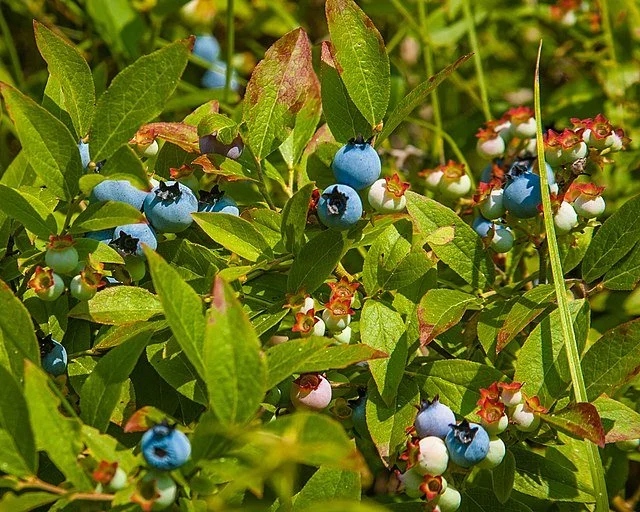
Little Blueberry, Vaccinium darrowii, is a compact evergreen blueberry that brings both ornamental value and a rewarding edible harvest to Florida landscapes. Its small, glossy leaves stay attractive through the year, while spring flowers (white to pale pink) draw pollinators to the garden.
This species is naturally suited to Florida’s acidic conditions in the right site, and it performs best when moisture is steady and the soil stays well-drained. With good placement and light annual pruning, it can remain productive for many years.
For best berry size and heavier yields, plant more than one compatible blueberry variety to encourage cross-pollination.
Any reference to medicinal or culinary use of plants or plant parts should in no way be considered an endorsement by The Ocala Food Forest or its staff. Research is crucial in safe and proper consumption or experimentational use of any plant.
Other Varieties Suitable for Florida
Southern Highbush Hybrids
- Fruiting Season: early (often starting April)
- Best Pollinators: Jewel, Star
- Zone Range: 8–10
- Notes: large, sweet berries; early ripening.
- Fruiting Season: mid-season (often peaks May)
- Best Pollinators: Emerald, Star
- Zone Range: 8–10
- Notes: firm, flavorful berries; consistent yields.
- Fruiting Season: early to mid-season
- Best Pollinators: Emerald, Jewel
- Zone Range: 8–10
- Notes: vigorous growth; sweet, crisp berries.
Emerald
Jewel
Star
Plant Information
| Scientific Name: | Vaccinium darrowii |
|---|---|
| Family Name: | Ericaceae |
| Common Name(s): | Darrow’s Blueberry, Little Blueberry, Evergreen Blueberry |
| Size: | 1–3 feet tall and wide |
| Plant Type: | Shrub, Perennial (evergreen in warm climates) |
| Origin/Geographic Distribution: | Native to the southeastern United States (especially Florida and Georgia) |
| Native to: | Florida, Georgia |
| Native range in the USA: | Mostly found in Florida and parts of Georgia |
| Conservation Status: | Not currently threatened |
Cultivation
| Planting: | Early spring or late fall |
|---|---|
| Sun Exposure: | Full sun to partial shade |
| Soil Type: | Well-drained, acidic soil |
| Soil pH: | 4.0 to 5.5 |
| Water Requirements: | Regular watering; do not allow soil to fully dry out, especially while fruiting |
| Fertilizer Requirements: | Use a fertilizer formulated for acid-loving plants (often applied in early spring; sometimes again mid-summer if needed) |
| Pruning Requirements: | Late winter or early spring; remove weak/dead wood and maintain shape |
| Growth Rate: | Slow to moderate |
| Companion Planting: | Pairs well with other acid-loving plants (azaleas, camellias, and similar) |
Tolerance and Hardiness
| Drought Tolerance: | Moderate once established; prefers consistent moisture |
|---|---|
| Frost Tolerance: | Good; tolerates light frosts (to roughly 20°F / -6°C when dormant) |
| Heat Tolerance: | Good; tolerates heat to about 95°F (35°C) with adequate moisture |
| Wind Tolerance: | Moderate; shelter from strong winds is beneficial |
| Salt Tolerance: | Low; avoid direct coastal exposure |
| USDA Plant Hardiness Zones: | 8–10 |
Flower and Fruit Information
| Fruit Type: | Small, round blueberries |
|---|---|
| Harvest Time: | Early to mid-summer |
| Fruit Description: | Sweet and flavorful; excellent fresh, in jams, and for baking |
| Edible Plant: | Yes |
| Edible Parts: | Fruit |
| Medicinal: | No known medicinal uses; valued for nutrition (vitamin C, fiber, and minerals) |
| Flower Color: | White to light pink |
| Flower Shape: | Small, bell-shaped |
| Fragrance: | Not particularly fragrant |
| Flower Bloom Time: | Spring |
| Bloom Duration: | Several weeks |
| Pollination: Self or Other? | Partially self-fertile; cross-pollination improves production |
Wildlife
| Attracts: | Bees, butterflies, and birds (especially when fruit is present) |
|---|---|
| Pollinators: | Bees and butterflies |
| Problematic Pest: | Blueberry pests may include aphids and blueberry maggot (pressure varies by site) |
Health and Safety
| Toxic: | No; berries are safe and nutritious |
|---|---|
| Poisonous Parts of Plant: | None |
| Toxic to Humans: | Not toxic |
| Toxic to Animals: | Non-toxic; safe for wildlife and pets |
| Plant Diseases to be aware of: | Stem blight, root rot, leaf spot (risk increases with poor drainage and low airflow) |
Companion Planting
For Vaccinium darrowii (Little Blueberry), companions work best when they share the same acidic soil preference and help support pollinators, soil health, and moisture retention.
Azaleas & Native Rhododendrons (Rhododendron spp.)
Benefits: Thrive in acidic soils and add strong seasonal blooms that bring in pollinators.
Use:
- Plant as a backdrop or border near blueberries.
- Mulch both heavily with pine bark/needles to keep pH stable.
Pines (Pinus spp.)
Benefits: Needle litter helps maintain acidity and can provide light, dappled shade.
Use:
- Use as perimeter trees, not directly on top of the blueberry root zone.
- Collect needles as mulch where appropriate.
Ferns (various species)
Benefits: Adds ground-level texture and helps conserve soil moisture without heavy competition.
Use:
- Underplant around the edges of blueberry beds.
- Keep the immediate crown area of blueberries open for airflow.
Gardenia (Gardenia jasminoides)
Benefits: Acid-loving shrub with fragrant blooms; supports pollinators and adds evergreen structure.
Use:
- Plant nearby as a structural companion in an acid-loving bed.
- Keep spacing generous to reduce humidity trapping.
Yarrow (Achillea millefolium)
Benefits: Attracts beneficial insects that can help suppress soft-bodied pests.
Use:
- Plant in sunny edges near the blueberry patch.
- Use as a pollinator strip rather than tight underplanting.
Mint (Mentha spp.) — Container Only
Benefits: Strong scent may deter some pests and browsing pressure.
Use:
- Keep in pots to prevent spreading.
- Place containers near (not inside) the blueberry root zone.