Garlic Vine (Mansoa hymenaea)
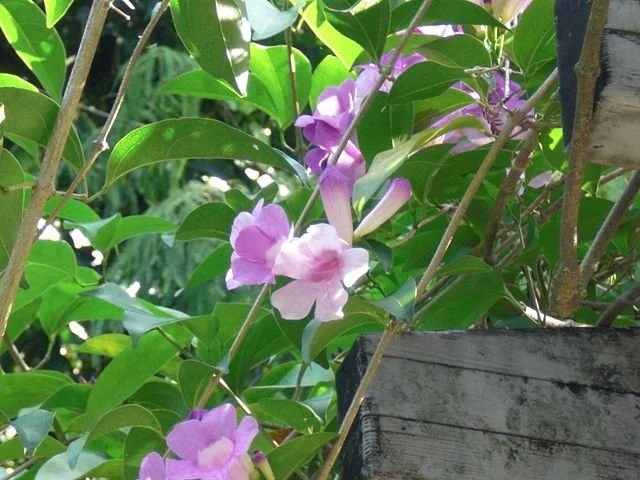
Garlic Vine, Mansoa hymenaea, is a tropical perennial vine prized for its vivid lavender-to-purple, tubular blooms and its unmistakable garlic-like aroma when the leaves are brushed or crushed.
In Florida planting zone 9, it’s most often trained on fences, arbors, and trellises where it can climb and spill outward, creating a dense, flowering screen. When it’s happiest, it rewards you with long stretches of bloom and steady pollinator activity.
For best performance, give it support to climb, room for airflow, and occasional pruning to keep growth tidy and encourage fresh flowering shoots.
Any reference to medicinal or culinary use of plants or plant parts should in no way be considered an endorsement by The Ocala Food Forest or its staff. Research is crucial in safe and proper consumption or experimentational use of any plant.
Plant Information
| Scientific Name: | Mansoa hymenaea |
|---|---|
| Family Name: | Bignoniaceae |
| Common Name(s): | Garlic Vine, False Garlic |
| Size: | Climbing vine; commonly 6–8+ feet long with support (can grow longer in ideal conditions) |
| Plant Type: | Tropical perennial vine |
| Origin/Geographic Distribution: | Native to tropical regions of Central and South America (especially Brazil) |
| Native to: | Brazil |
| Native range in the USA: | Not native to the USA; commonly grown in subtropical gardens (including Florida) |
| Conservation Status: | Not listed as threatened |
Cultivation
| Planting: | Spring to early summer (establish before cooler months) |
|---|---|
| Sun Exposure: | Full sun to partial shade |
| Soil Type: | Rich, well-drained soil |
| Soil pH: | 5.0 to 6.5 (slightly acidic) |
| Water Requirements: | Moderate; keep evenly moist while establishing, then water as needed |
| Fertilizer Requirements: | Moderate; feed with a balanced fertilizer every few months during the growing season |
| Pruning Requirements: | Prune to control size, guide growth on supports, and remove dead/damaged stems |
| Growth Rate: | Fast; quickly reaches full size in ideal conditions |
| Companion Planting: | Pairs well with other tropical/subtropical ornamentals for a layered, pollinator-friendly planting |
Tolerance and Hardiness
| Drought Tolerance: | Moderate (once established) |
|---|---|
| Frost Tolerance: | Low; protect from cold (damage likely below ~40°F / 4°C) |
| Heat Tolerance: | High; performs well in hot, humid climates |
| Wind Tolerance: | Moderate; provide sturdy support in exposed areas |
| Salt Tolerance: | Moderate; best with protection from direct salt spray |
| USDA Plant Hardiness Zones: | 8b–11 |
Flower and Fruit Information
| Fruit Type: | Seed pods (not typically used) |
|---|---|
| Harvest Time: | N/A (grown primarily for flowers) |
| Fruit Description: | Small seed pods; ornamental interest is secondary to blooms |
| Edible Plant: | No (not recommended for consumption) |
| Edible Parts: | None |
| Medicinal: | Traditional uses have been reported in some regions; research and caution are essential |
| Flower Color: | Purple to lavender |
| Flower Shape: | Tubular |
| Fragrance: | Garlic-like scent when leaves are touched or crushed; flowers may be mildly fragrant |
| Flower Bloom Time: | Most prolific spring through fall (may bloom longer in warm microclimates) |
| Bloom Duration: | Long-lasting with repeat flushes in warm weather |
| Pollination: Self or Other? | Attracts bees, butterflies, and hummingbirds |
Wildlife
| Attracts: | Bees, butterflies, and hummingbirds (nectar seekers) |
|---|---|
| Pollinators: | Bees and butterflies |
| Problematic Pest: | Generally pest-resistant; occasional issues with aphids and spider mites |
Health and Safety
| Toxic: | Not commonly listed as highly toxic; avoid ingestion and use typical garden precautions |
|---|---|
| Poisonous Parts of Plant: | Not established for consumption; treat plant parts as non-edible |
| Toxic to Humans: | Avoid eating; wash hands after pruning if you have sensitive skin |
| Toxic to Animals: | Discourage pets from chewing ornamental vines |
| Plant Diseases to be aware of: | Root rot in overly wet soils; fungal issues possible with poor airflow in humid weather |
Companion Planting
Companion planting with Garlic Vine can help create a layered, tropical look while also increasing nectar and habitat diversity for pollinators. Choose companions with similar light and moisture needs, and give climbing plants adequate space so they don’t smother each other.
Bougainvillea (Bougainvillea spp.)
Benefits: Intense color contrast and long-season interest; thrives in sun and handles heat well.
Use:
- Plant near sturdy structures so both can be trained cleanly.
- Prune regularly to prevent one vine from overtaking the other.
Golden Dewdrop (Duranta erecta)
Benefits: Adds shrub structure and supports pollinators; bright blooms complement purple vines.
Use:
- Place as a backdrop shrub near trellises or fences.
- Keep away from play/pet areas if fruiting is a concern.
Hibiscus (Hibiscus rosa-sinensis)
Benefits: Bold flowers add height and focal points beneath a climbing vine canopy.
Use:
- Plant at the base or nearby to create a layered, tropical bed.
- Maintain airflow between shrub and vine for healthier foliage.
Jasmine (Jasminum spp.)
Benefits: Adds fragrance and additional bloom cycles, boosting pollinator traffic.
Use:
- Train on separate sections of a pergola or fence for tidy growth.
- Prune to prevent tangling and shading.
Gardenia (Gardenia jasminoides)
Benefits: Glossy evergreen foliage and fragrant white blooms contrast beautifully with purple flowers.
Use:
- Plant near the vine base as a “foundation” shrub layer.
- Mulch to maintain moisture and reduce root stress in heat.
Passionflower (Passiflora spp.)
Benefits: Adds unique flowers and supports butterflies; increases biodiversity.
Use:
- Only co-plant if you have ample space and strong supports.
- Train intentionally so one vine doesn’t overwhelm the other.