Sapphire Shower (Duranta erecta)
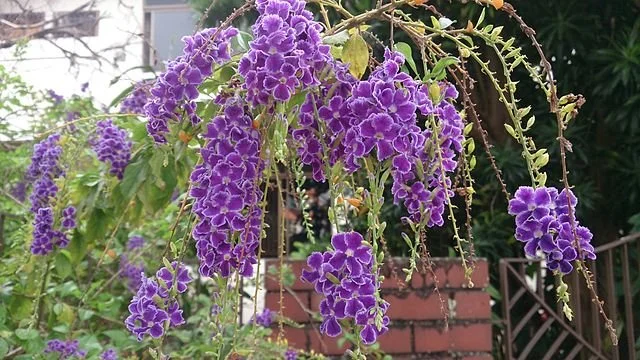
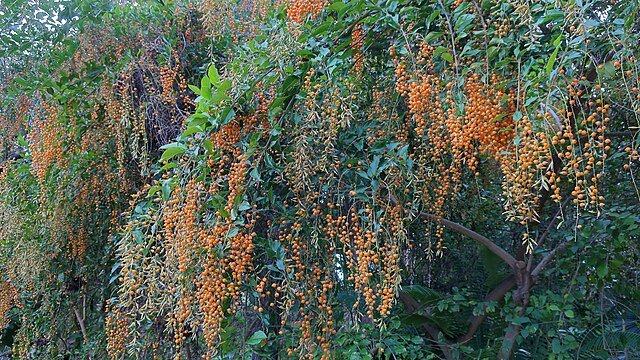
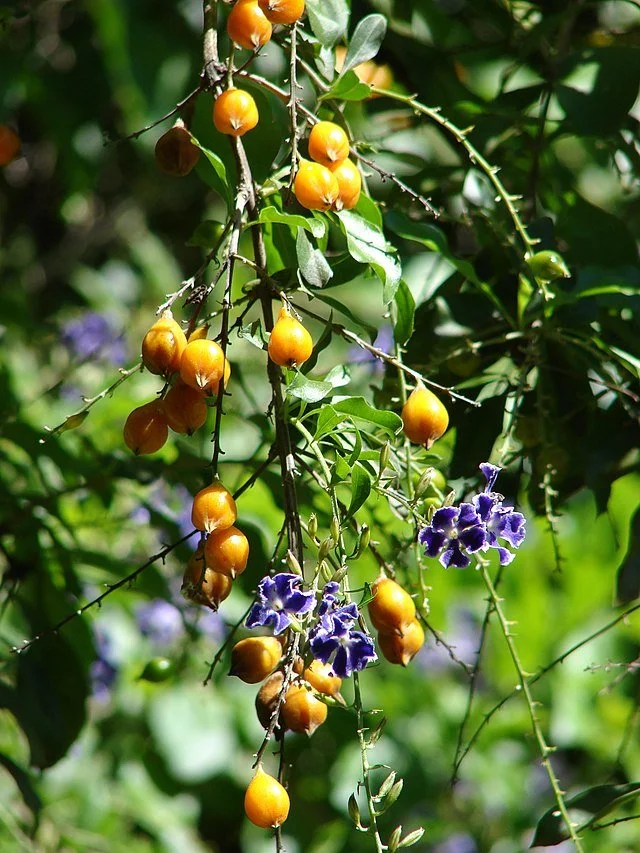
Unleash the vibrant charm of Sapphire Shower plant, a dazzling evergreen that captivates with its stunning display of colorful flowers and ornamental berries. This versatile shrub is celebrated not just for its aesthetic appeal but also for its robust growth and adaptability, making it a prized addition to any tropical or subtropical garden.
Visual Appeal
Duranta erecta, known for its lush foliage and arching branches, reaches heights of 10 to 15 feet, creating a striking presence in any landscape. During late spring to early summer, the plant bursts into life with clusters of small, tubular flowers, ranging in color from vivid blue to purple, which beautifully complement its bright green leaves. As the season progresses, these flowers give way to hanging clusters of golden or violet berries, adding a splash of color and intrigue that persists into the fall.
Beyond its ornamental use, Duranta erecta is often employed in hedges and as a feature plant in floral borders. Its ability to be shaped makes it popular for topiaries and garden sculptures, offering creative ways to personalize your green spaces.
A Note of Caution
While the Sapphire Shower plant is a marvel to behold, it's important to note that its berries are toxic if ingested by humans or pets. Always consider placement carefully, especially in gardens frequented by children and animals.
Invite Golden Dewdrop Into Your Garden
Embrace the enchanting allure of Duranta erecta and let its cascading flowers and berries transform your garden into a vibrant sanctuary. Whether you're looking to attract wildlife, create stunning visual displays, or simply enjoy the lush, tropical vibe, Sapphire Shower is an exceptional choice that promises year-round beauty.
Any reference to medicinal or culinary use of plants or plant parts should in no way be considered an endorsement by The Ocala Food Forest or its staff. Research is crucial in safe and proper consumption or experimentational use of any plant.
Plant Information
| Scientific Name: | Duranta erecta |
|---|---|
| Family Name: | Verbenaceae |
| Common Name(s): | Duranta, Golden Dewdrop, Sappire Showers, Pigeon Berry, Skyflower |
| Size: | 10 to 15 feet tall and wide |
| Plant Type: | Evergreen shrub, Perennial |
| Origin/Geographic Distribution: | Native to tropical America; widely cultivated in tropical and subtropical climates worldwide |
| Native to: | Some sources claim it is native to the West Indies and Central America, while others claim it is native to the Florida Keys. It is also said to be native from Florida to Brazil and in the West Indies. There is some debate about whether the plant is also native to the southern United States, including Florida. So, while it’s not definitively established, there are claims that the Duranta erecta could be native to Florida. |
| Native range in the USA: | Common in southern states like Florida and Texas |
| Conservation Status: | Not listed as endangered or threatened by major international bodies. |
Cultivation
| Planting: | Spring to ensure establishment before winter |
|---|---|
| Sun Exposure: | Full sun to partial shade |
| Soil Type: | Rich, well-drained |
| Soil pH: | 5.6 to 6.5 |
| Water Requirements: | Low; only water your tree occasionally. |
| Fertilizer Requirements: | High; benefits from regular feeding with a balanced fertilizer during the growing season. |
| Pruning Requirements: | Regular pruning to maintain shape and encourage bushier growth |
| Growth Rate: | Fast, up to 24 inches per year under ideal conditions |
| Companion Planting: | Complements other tropical plants like hibiscus, bougainvillea, and palms |
Tolerance and Hardiness
| Drought Tolerance: | Moderate; more drought-resistant once established, only water your tree occasionally. |
|---|---|
| Frost Tolerance: | Low; damage occurs at temperatures below 30°F / -1°C. Even if it experiences cold damage, it will bounce back in the spring. |
| Heat Tolerance: | Very high; thrives in hot, tropical conditions up to 100°F / 38°C |
| Wind Tolerance: | Moderate; can handle some wind but may need protection from strong gusts |
| Salt Tolerance: | Low; not suitable for coastal areas, cannot survive salt. |
| USDA Plant Hardiness Zones: | 9 to 11 |
Flower and Fruit Information
| Fruit Type: | Small, round berries |
|---|---|
| Harvest Time: | Summer to winter; berries are ready when they turn bright yellow or violet |
| Fruit Description: | Vibrant yellow or violet berries clustered along the stems, very attractive to birds. The fruits are typically half an inch in diameter and hang from the plant like densely clustered strands of pearls. |
| Edible Plant: | No; berries are toxic to humans and pets |
| Edible Parts: | None; plant should not be consumed |
| Medicinal: | Traditionally used in some cultures for its purported medicinal properties, though not commonly used in modern herbalism |
| Flower Color: | Blue to purple |
| Flower Shape: | Small, tubular |
| Fragrance: | Lightly fragrant |
| Flower Bloom Time: | Late spring to early summer |
| Bloom Duration: | Continues through early fall |
| Pollination: Self or Other? | Attracts bees, butterflies, and other pollinators |
Wildlife
| Attracts: | Birds, particularly those that feed on the berries |
|---|---|
| Pollinators: | Bees and butterflies |
| Problematic Pest: | Pest problems are typically not serious, but potential offenders are caterpillars, nematodes, and scale. |
Health and Safety
| Toxic: | Yes, berries are toxic to humans and pets |
|---|---|
| Poisonous Parts of Plant: | Berries |
| Toxic to Humans: | Yes, berries are poisonous if ingested |
| Toxic to Animals: | Yes, berries are toxic to pets |
| Plant Diseases to be aware of: | Can be prone to fungal diseases in humid conditions |
Companion Planting
For companion planting with Duranta erecta in Florida, here’s a selection of both Florida Native and Florida Friendly plants that complement Duranta visually and ecologically.
Firebush (Hamelia patens)
Zone Range: 8–11
Benefits: Red-orange flowers attract hummingbirds and butterflies; complements Duranta’s height and color.
Use: Background shrub or mixed border companion.
Beautyberry (Callicarpa americana)
Zone Range: 6–10
Benefits: Purple berries add striking contrast; supports birds in fall/winter.
Use: Understory shrub or seasonal color anchor.
Muhly Grass (Muhlenbergia capillaris)
Zone Range: 6–11
Benefits: Soft texture contrast; pink-purple plumes pair well with Duranta’s form.
Use: Mass plantings, edging, or accent drifts.
Coral Honeysuckle (Lonicera sempervirens)
Zone Range: 4–10
Benefits: Adds vertical interest and tubular blooms that attract pollinators.
Use: Trellis/fence vine near Duranta for layered habitat.
Tickseed (Coreopsis spp.)
Zone Range: 4–9
Benefits: Cheerful yellow blooms attract pollinators and brighten the base planting.
Use: Sunny border front or pollinator strip.
Wild Coffee (Psychotria nervosa)
Zone Range: 9–11
Benefits: Glossy foliage and berries support birds; tolerates partial shade near larger shrubs.
Use: Mid-layer shrub for mixed plantings.
Jatropha (Jatropha integerrima)
Zone Range: 10–12
Benefits: Long bloom season and bright red/pink flowers enhance tropical color and attract butterflies.
Use: Accent shrub in sunny beds.
Ixora (Ixora spp.)
Zone Range: 9–11
Benefits: Dense flower clusters complement Duranta’s bloom display; similar sun and drainage preferences.
Use: Hedge layering or mass plantings for color blocks.
Bougainvillea (Bougainvillea spp.)
Zone Range: 9–11
Benefits: Bold color and height add dramatic contrast and structure.
Use: Wall/fence feature or background anchor.
Pentas (Pentas lanceolata)
Zone Range: 10–11
Benefits: Star-shaped flowers attract butterflies and hummingbirds; great low-to-mid layer filler.
Use: Border fronts, containers, and pollinator beds.
Croton (Codiaeum variegatum)
Zone Range: 9–11
Benefits: Dramatic foliage colors add contrast to Duranta’s green leaves and purple flowers.
Use: Foliage feature in tropical plantings.
Plumbago (Plumbago auriculata)
Zone Range: 8–11
Benefits: Soft blue flowers provide a gentle color bridge near Duranta’s blue-purple blooms.
Use: Space-filler shrub or low hedge companion.