Dry Twinflower (Dyschoriste oblongifolia)
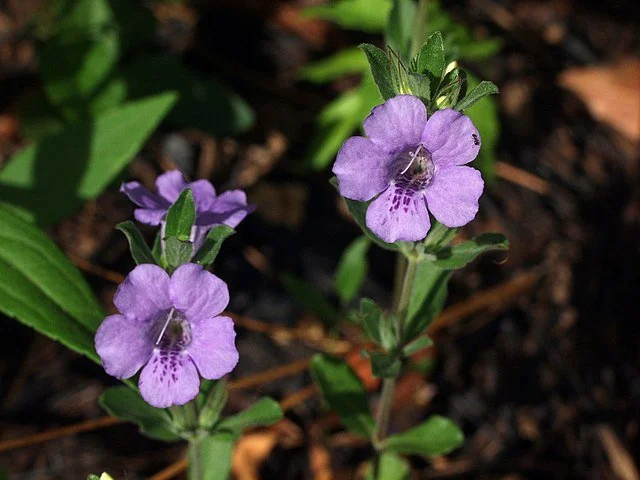
Imagine a delightful addition to your garden that not only captivates with its charming blooms but also invites a lively buzz of nature's workers. Dry Twinflower, Dyschoriste oblongifolia, is a perennial favorite that stands out with vibrant flowers that bring vivid color and a softer, naturalistic look to sunny beds and open spaces.
As you stroll through your garden, its blossoms add depth and character to the landscape while quietly supporting biodiversity. When it is happy in its spot, it helps fill gaps and turns bare ground into a living patchwork that draws in pollinators like bees and butterflies.
Tip: In Florida planting zone 9, Dry Twinflower is a strong choice for low-maintenance pollinator pockets in full sun to light shade.
Any reference to medicinal or culinary use of plants or plant parts should in no way be considered an endorsement by The Ocala Food Forest or its staff. Research is crucial in safe and proper consumption or experimentational use of any plant.
Plant Information
| Scientific Name: | Dyschoriste oblongifolia |
|---|---|
| Family Name: | Acanthaceae (Acanthus family) |
| Common Name(s): | Dry Twinflower, Oblongleaf Snakeherb |
| Size: | Typically grows 1 to 2 feet tall and spreads 2 to 3 feet wide |
| Plant Type: | Perennial herb |
| Origin/Geographic Distribution: | Native to the southeastern United States, particularly Florida |
| Native to: | Florida, Georgia, and surrounding areas |
| Planted range in the USA: | Commonly found in natural and landscaped areas throughout Florida and parts of the Southeast |
| Conservation Status: | Not listed as threatened or endangered |
Cultivation
| Planting: | Best planted in early spring to establish before the hot summer |
|---|---|
| Sun Exposure: | Full sun to partial shade |
| Soil Type: | Well-drained, sandy soil; tolerant of a variety of soil types |
| Soil pH: | 5.5 to 7.0 (slightly acidic to neutral) |
| Water Requirements: | Drought tolerant once established; performs best with moderate watering during establishment |
| Fertilizer Requirements: | Low; a light application of a balanced, slow-release fertilizer at the beginning of the growing season can be beneficial. |
| Pruning Requirements: | Minimal; trim back as needed to control spread and encourage denser growth |
| Growth Rate: | Medium to fast; can fill in open spaces once established |
| Companion Planting: | Complements native grasses and wildflowers; strong fit for naturalistic landscapes |
Tolerance and Hardiness
| Drought Tolerance: | High; well-adapted to dry conditions |
|---|---|
| Frost Tolerance: | Moderate; can handle brief frosts down to about 20°F (-6°C) |
| Heat Tolerance: | Excellent; can thrive in temperatures up to about 100°F (38°C) |
| Wind Tolerance: | Moderate |
| Salt Tolerance: | Moderate; can be used in coastal areas where salt spray is not direct |
| USDA Plant Hardiness Zones: | 8a–11 |
Flower and Fruit Information
| Fruit Type: | Small capsule |
|---|---|
| Harvest Time: | Not typically harvested; fruit matures in late summer to fall |
| Fruit Description: | Small; not typically noticeable against the foliage |
| Edible Plant: | No; not known for edible uses |
| Edible Parts: | None |
| Medicinal: | Not commonly used medicinally |
| Flower Color: | Purple to lavender |
| Flower Shape: | Small, bilaterally symmetrical |
| Fragrance: | Mildly fragrant; helps attract pollinators |
| Flower Bloom Time: | Spring through early summer |
| Bloom Duration: | Several weeks, providing a long-lasting display |
| Pollination: Self or Other? | Attracts bees, butterflies, and other pollinators |
Wildlife
| Attracts: | A variety of pollinators, including bees and butterflies |
|---|---|
| Pollinators: | Bees and butterflies are common pollinators |
| Problematic Pest: | Generally pest-resistant; occasionally may attract aphids. |
Health and Safety
| Toxic: | No, Dyschoriste oblongifolia is not toxic and is generally considered safe around children and pets |
|---|---|
| Poisonous Parts of Plant: | None |
| Toxic to Humans: | Not toxic |
| Toxic to Animals: | Non-toxic; generally safe for pets and wildlife |
| Plant Diseases to be aware of: | Powdery Mildew, Root Rot, Downy Mildew |
Companion Planting
For Dyschoriste oblongifolia (Dry Twinflower), companions are most effective when they share similar sun and drainage preferences, extend bloom coverage through the season, and support beneficial insects—without crowding the Twinflower’s footprint.
Cabbage Palm (Sabal palmetto)
Benefits: Provides vertical structure and light canopy shade, helping create layered habitat.
Use:
- Plant Twinflower around the outer drip line, not tight to the trunk.
- Use as an anchor plant in a native bed.
Blanket Flower (Gaillardia pulchella)
Benefits: Strong color contrast and steady pollinator draw in sunny, dry beds.
Use:
- Interplant near the front edge for bloom layering.
- Use in drifts to create a natural “meadow” feel.
Black-eyed Susan (Rudbeckia hirta)
Benefits: Tall, bright blooms bring height and attract additional pollinators.
Use:
- Place behind Twinflower as a backdrop.
- Use along borders for a long-view color band.
Lanceleaf Coreopsis (Coreopsis lanceolata)
Benefits: Golden blooms boost pollinator activity and brighten native beds.
Use:
- Mix through the planting to extend bloom timing.
- Use where you want a lighter, airy texture around the Twinflower.
Pink Muhly Grass (Muhlenbergia capillaris)
Benefits: Fine texture and fall color provide movement and seasonal contrast.
Use:
- Plant behind Twinflower to frame it with soft plumes later in the year.
- Use as a texture “bridge” between flowers and shrubs.
Rattlesnake Master (Eryngium yuccifolium)
Benefits: Architectural form and strong beneficial-insect support.
Use:
- Place as a statement plant in mixed borders.
- Use to add height and structure without heavy shade.
Lantana (Lantana camara)
Benefits: Drought-tough color and strong butterfly attraction.
Use:
- Place in the sunniest spots as a pollinator “magnet” near the bed.
- Keep trimmed so it doesn’t crowd lower plants.
Scarlet Sage (Salvia coccinea)
Benefits: Long bloom season; attracts butterflies and hummingbirds.
Use:
- Interplant for a stronger color contrast against lavender blooms.
- Use in pockets to extend nectar availability.
Tall Verbena (Verbena bonariensis)
Benefits: Adds airy height and draws pollinators without heavy shade.
Use:
- Plant behind Twinflower for a layered look.
- Use as a light, see-through “screen” in butterfly beds.
Blue Porterweed (Stachytarpheta jamaicensis)
Benefits: Reliable pollinator plant that supports butterflies over a long season.
Use:
- Edge pathways or bed fronts near the Twinflower planting.
- Use to keep pollinator traffic steady through warm months.