Dragon Fruit, Red (Hylocereus costaricensis)
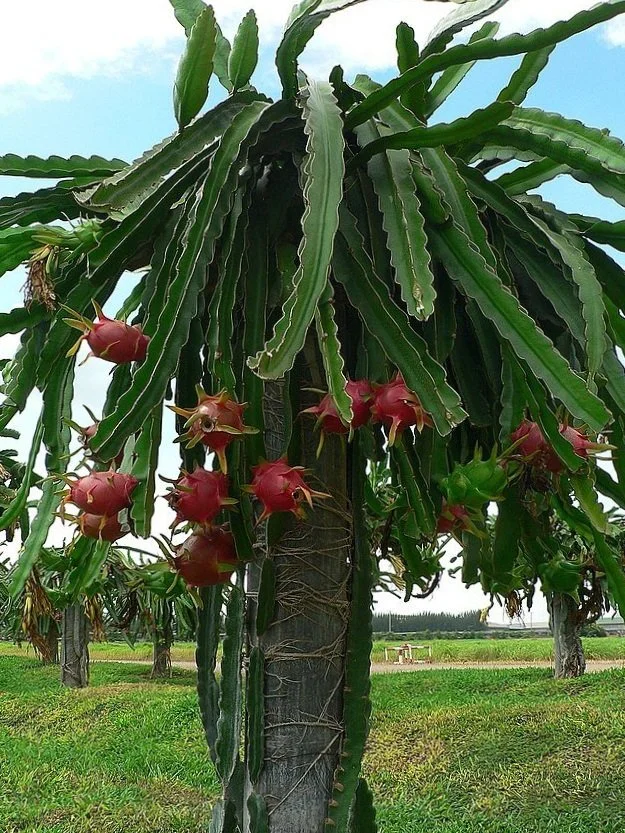
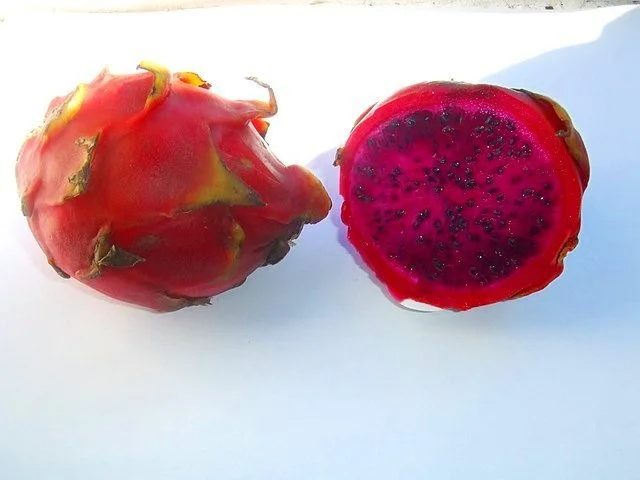
Dragon fruit, with its vibrant hues and unique appearance, is a delight not just to the palate but also to the eye. One of its lesser-known varieties, the Hylocereus costaricensis, or the Costa Rican pitaya, offers a deeper dive into the diverse world of this exotic fruit. Originating from Central America, particularly from Costa Rica and Nicaragua, this species is distinctive for its striking red flesh, which contrasts beautifully against its pink scaly exterior.
Hylocereus costaricensis belongs to the cacti family and thrives in tropical and subtropical climates. What sets it apart from its relatives, such as the more commonly known Hylocereus undatus which has white flesh, is not only its flesh color but also its richer, sweeter flavor. This makes it a favorite among chefs and food enthusiasts looking to add both color and taste to their dishes.
Growing Hylocereus costaricensis can be an exciting endeavor for gardeners. This cactus is a night bloomer and its flowers are large, fragrant, and only open after dark, often wilting by the morning. This ephemeral blooming adds an element of mystery and allure to its cultivation. Furthermore, the plant is relatively hardy, requiring minimal water once established and thriving in well-draining soil, making it suitable for xeriscaping.
Nutritionally, the Costa Rican pitaya is packed with vitamins, minerals, and antioxidants. It is particularly high in vitamin C, fibers, and B vitamins, supporting better digestion and overall health. The seeds contain omega-3 and omega-6 fatty acids, which are beneficial for heart health.
In recent years, Hylocereus costaricensis has gained popularity not just for its health benefits but also for its versatility in culinary applications. From smoothies and salads to exotic desserts, this dragon fruit variant is making its mark in the culinary world. Its vibrant red juice is also used as a natural food coloring, proving its utility extends beyond taste.
For those intrigued by rare and exotic fruits, Hylocereus costaricensis offers a fascinating glimpse into the diversity of nature's bounty. Its cultivation, nutritional benefits, and culinary versatility make it a worthy addition to the gardens and diets of those seeking a taste of the tropics. Whether you're a gardener, a chef, or simply a lover of exotic fruits, the Costa Rican pitaya is sure to impress with its stunning visuals and delicious flavor.
Varieties Suitable for Florida:
Hylocereus undatus (White Flesh Dragon Fruit):
Fruiting Season: Summer to early fall (typically July to October)
Pollination: Self-fertile, but hand pollination can improve fruit set and size.
Best Pollinators: Can benefit from cross-pollination with other Hylocereus species.
Planting Zone Range: 10–12
Description: Known for its white flesh and mild flavor. Produces large night-blooming flowers.
Hylocereus costaricensis (Red Flesh Dragon Fruit):
Fruiting Season: Summer to early fall (typically July to October)
Pollination: Self-fertile, but hand pollination can enhance yield and fruit quality.
Best Pollinators: Benefits from being planted alongside other dragon fruit varieties for cross-pollination.
Planting Zone Range: 10–12
Description: Valued for its deep red flesh and sweet flavor; vigorous grower with striking flowers.
Hylocereus megalanthus (Yellow Dragon Fruit):
Fruiting Season: Late summer to fall
Pollination: Requires cross-pollination for effective fruiting.
Best Pollinators: Cross-pollination with other Hylocereus species is recommended.
Planting Zone Range: 10–12
Description: Yellow-skinned fruit with white flesh; notably sweet and highly sought-after.
These dragon fruit varieties are particularly suited to the warm, subtropical climate of Florida's planting zone 10–12. Hand pollination is often necessary to ensure a good harvest, especially in a garden setting where natural pollinators may be limited.
Any reference to medicinal or culinary use of plants or plant parts should in no way be considered an endorsement by The Ocala Food Forest or its staff. Research is crucial in safe and proper consumption or experimentational use of any plant.
Plant Information
| Scientific Name: | Hylocereus costaricensis |
|---|---|
| Family Name: | Cactaceae |
| Common Name(s): | Dragon Fruit |
| Size: | 15–20' tall, ~1' wide (trained/climbing) |
| Plant Type: | Perennial Succulent (cactus vine) |
| Origin/Geographic Distribution: | Originates from Costa Rica and Nicaragua; widely cultivated in other parts of the Americas, Asia, and Israel for its fruit. |
| Native to: | Central America (Costa Rica and Nicaragua) |
| Native range in the USA: | Not native to the U.S.; grown primarily in Florida, California, and Hawaii where climates are suitable. |
| Conservation Status: | Not currently listed as endangered or threatened by major international bodies. |
Cultivation
| Planting: | Requires full sun for optimal growth and should be protected from frosty temperatures. Prefers well-draining soil but needs regular watering so roots stay lightly moist; avoid overwatering to reduce risk of rot/fungus. |
|---|---|
| Sun Exposure: | Full Sun, Part Shade |
| Soil Type: | Mostly sand; very well-drained |
| Soil pH: | 6.1–7.5 (slightly acidic – neutral) |
| Water Requirements: | Moist to slightly dry, well-drained. Drought-tolerant once established, but regular watering in spring/summer supports faster growth. Reduce water in cooler months. Poor drainage can cause root rot and stunting. |
| Fertilizer Requirements: | Every 4–6 weeks during spring/summer; reduce or stop in fall/winter as growth slows. Avoid over-fertilizing (can favor foliage over fruit or damage the plant). |
| Pruning Requirements: | Best after harvest (late fall/early winter). Remove dead/diseased stems, thin overcrowded growth for airflow, and shape for fruit production and easier harvesting. |
| Growth Rate: | Fast under optimal conditions; can add several feet in a single growing season and develops aerial roots for climbing/support. |
| Companion Planting: | Companion planting can enhance ecological health and potentially improve yield and fruit quality. See Companion Planting section below. |
Tolerance and Hardiness
| Drought Tolerance: | Drought-tolerant once established, but consistent moisture supports flowering and fruit development. Mature plants handle short dry periods better than young plants. |
|---|---|
| Frost Tolerance: | 40°F |
| Heat Tolerance: | Up to 125°F (in part shade) |
| Wind Tolerance: | Moderate, but strong winds can break stems/tear tissue and increase water loss—especially when carrying heavy fruit loads. Provide wind protection in exposed sites. |
| Salt Tolerance: | Not salt-tolerant; sensitive to soil salinity and salt spray. |
| USDA Plant Hardiness Zones: | 10–11 |
Flower and Fruit Information
| Fruit Type: | Berry |
|---|---|
| Harvest Time: | May take a few years to begin producing. Mature plants can produce multiple cycles per year; fruits typically develop 30–50 days after flowering. |
| Fruit Description: | Vivid red skin with scales and deep red flesh dotted with small black seeds. |
| Edible Plant: | Yes |
| Edible Parts: |
1. Fruit: Sweet, mildly tart pulp with edible seeds; eaten fresh or used in recipes. 2. Flowers: Large white flowers can be eaten (e.g., salads, tea, cooked dishes) with a mildly sweet flavor. |
| Medicinal: | Yes |
| Flower Color: | Large, showy flowers typically white or very light cream |
| Flower Shape: | Large and expansive, opening widely with layered petals around a prominent central structure, giving an ornate, exotic appearance. |
| Fragrance: | Sweet and subtly tropical; often described as vanilla/jasmine-like, strongest at night |
| Flower Bloom Time: | Early summer through early fall (often June–September) |
| Bloom Duration: | Nocturnal; opens in the evening and often wilts by morning |
| Pollination: Self or Other? |
Requires cross-pollination with another genetically distinct plant of the same species or a compatible Hylocereus species. Can be achieved via hand-pollination or nighttime pollinators (e.g., bats, moths). |
Wildlife
| Pollinators: | Moths and bats (night pollination) |
|---|---|
| Problematic Pest: | Mealybugs, aphids, scale insects, spider mites, snails, and slugs. |
Health and Safety
| Toxic: | Not toxic |
|---|---|
| Poisonous Parts of Plant: | None |
| Toxic to Humans: | No |
| Toxic to Animals: | No |
| Plant Diseases to be aware of: | Anthracnose, stem rot, root rot, powdery mildew, bacterial soft rot |
Companion Planting
Companion planting with Hylocereus costaricensis (dragon fruit) can support biodiversity, reduce pest pressure, and improve overall garden resilience. Below are practical companions and how to use them.
Legumes (Beans and Peas)
Benefits: Fix nitrogen in the soil, supporting nutrient availability.
Use: Plant around the base of the trellis; some can use the structure for light support.
Marigolds
Benefits: Repel certain pests and attract beneficial insects.
Use: Plant around the perimeter of the dragon fruit planting area.
Basil
Benefits: Helps repel thrips, flies, and mosquitoes; can support a healthier garden micro-ecosystem.
Use: Plant beneath or around the trellis where it gets sun and good airflow.
Garlic
Benefits: Strong scent can deter a range of insect pests.
Use: Intersperse around the trellis base as a protective ring.
Nasturtiums
Benefits: Can act as a trap crop for aphids and other pests.
Use: Plant along the edges of the bed to draw pests away from the cactus stems.
Tall Shrubs or Small Trees
Benefits: Provide partial shade and wind buffering in harsh sites (very hot or windy).
Use: Place strategically to shield from extremes without fully shading the dragon fruit.
Chives
Benefits: Can help repel pests; commonly used as a beneficial border plant.
Use: Plant at the base of the trellis as a low-maintenance companion.