Coral Honeysuckle (Lonicera sempervirens)
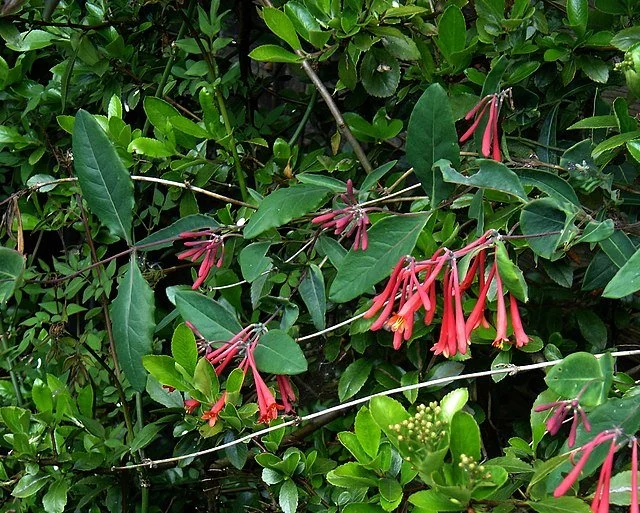
Imagine a cascade of vibrant, trumpet-shaped flowers, radiating hues of deep coral, soft pink, and sunny yellow. This is the enchanting display offered by Lonicera sempervirens, commonly known as Coral Honeysuckle. A native gem of North America, this perennial vine brings a touch of wild beauty to any garden setting, making it a perfect choice for those new to gardening who want to create a visually stunning landscape with ease.
Coral Honeysuckle is celebrated not only for its eye-catching blooms but also for the charming way it climbs trellises, fences, and arbors, transforming them into living art pieces. The flowers, which bloom generously from spring through summer, are a favorite among hummingbirds and butterflies, adding a delightful element of wildlife watching to your garden experience. As the seasons change, these flowers give way to bright red berries that attract songbirds, extending the life of your garden's appeal into the colder months.
The allure of Coral Honeysuckle goes beyond its aesthetic contributions. Its presence in a garden brings a sense of enchantment and a connection to the natural world. Whether draped over a garden gate, climbing up a wall, or simply sprawling along the ground in a sun-drenched spot, this vine adds a layer of beauty that evolves and grows through the years. Its capacity to thrive with such grace and vibrancy makes it an inspiring choice for anyone looking to enrich their outdoor space with both color and life.
Any reference to medicinal or culinary use of plants or plant parts should in no way be considered an endorsement by The Ocala Food Forest or its staff. Research is crucial in safe and proper consumption or experimentational use of any plant.
Plant Information
| Scientific Name: | Lonicera sempervirens |
|---|---|
| Family Name: | Caprifoliaceae (Honeysuckle family) |
| Common Name(s): | Coral Honeysuckle, Trumpet Honeysuckle |
| Size: | Can grow up to 15–20 feet long |
| Plant Type: | Perennial vine |
| Origin/Geographic Distribution: | Native to the southeastern United States |
| Native to: | Eastern and southern regions of the USA. It is a Florida Native plant. |
| Planted range in the USA: | Widely cultivated across the eastern and southern states, including Florida, Texas, and the Carolinas. |
| Conservation Status: | Not listed as threatened or endangered |
Cultivation
| Planting: | Best planted in early spring or fall |
|---|---|
| Sun Exposure: | Full sun to partial shade |
| Soil Type: | Well-drained, humus-rich soil |
| Soil pH: | 6.0 to 8.5 (acidic, neutral – alkaline) |
| Water Requirements: | Moderate; regular watering to establish, then can tolerate some drought. |
| Fertilizer Requirements: | Light feeding with a balanced fertilizer during the growing season. |
| Pruning Requirements: | Prune after flowering to shape and control growth. |
| Growth Rate: | Fast |
| Companion Planting: | Complements other climbers like climbing roses or clematis; also good with native shrubs and perennials for a naturalized look. |
Tolerance and Hardiness
| Drought Tolerance: | Moderate once established. |
|---|---|
| Frost Tolerance: | Good; can tolerate temperatures down to about -20°F (-29°C) |
| Heat Tolerance: | Excellent; can handle temperatures up to 100°F (38°C) |
| Wind Tolerance: | Moderate |
| Salt Tolerance: | Moderate; suitable for coastal areas away from direct salt spray. |
| USDA Plant Hardiness Zones: | 4–10 |
Flower and Fruit Information
| Fruit Type: | Small red berries |
|---|---|
| Harvest Time: | Not typically harvested; berries appear in late summer. |
| Fruit Description: | Attractive to birds but not generally considered edible for humans. |
| Edible Plant: | No, the berries are not recommended for human consumption. |
| Edible Parts: | N/A |
| Medicinal: | No known significant medicinal uses. |
| Flower Color: | Bright red or sometimes orange. |
| Flower Shape: | Tubular, trumpet-shaped |
| Fragrance: | Mildly fragrant, attracting pollinators |
| Flower Bloom Time: | Spring to early summer |
| Bloom Duration: | Several weeks, often reblooming in mild climates. |
| Pollination: Self or Other? | Self-pollinates; hummingbirds and butterflies will aid in pollination. |
Wildlife
| Attracts: | Hummingbirds, butterflies, and other pollinators are attracted to the vivid flowers. |
|---|---|
| Pollinators: | Hummingbirds and butterflies are key pollinators for Lonicera sempervirens. |
| Problematic Pest: | Generally pest-resistant; occasionally may attract aphids. |
Health and Safety
| Toxic: | No, Lonicera sempervirens is not toxic and is safe around children and pets. |
|---|---|
| Poisonous Parts of Plant: | None |
| Toxic to Humans: | Not toxic |
| Toxic to Animals: | Non-toxic; safe for pets and wildlife |
| Plant Diseases to be aware of: | Bacterial leaf spot, powdery mildew, verticillium wilt, root rot, and rust fungus. |
Companion Planting
For Lonicera sempervirens (Coral Honeysuckle), selecting the right companion plants can enhance the visual appeal and ecological balance of your garden. Below are Florida Native and Florida Friendly options, including zone range, benefits, and uses.
Florida Native: Sabal palmetto (Cabbage Palm)
Zone Range: 8–11
Benefits: Provides a sturdy support element and strong vertical structure for training the vine.
Use: Plant as a backdrop where Coral Honeysuckle can climb for a naturalized look.
Florida Native: Passiflora incarnata (Purple Passionflower)
Zone Range: 6–9
Benefits: Attracts similar pollinators and adds contrasting flower form and color.
Use: Co-plant along a fence line or trellis for a diverse, vibrant display.
Florida Native: Rudbeckia hirta (Black-eyed Susan)
Zone Range: 3–10
Benefits: Bright yellow blooms contrast with red honeysuckle flowers and attract beneficial insects.
Use: Plant at the base of the vine to fill lower space and support pollinator activity.
Florida Friendly: Catharanthus roseus (Madagascar Periwinkle)
Zone Range: 9–11
Benefits: Drought-tolerant and blooms prolifically, providing colorful underplanting.
Use: Edge pathways or plant in front of trellised vine plantings.
Florida Friendly: Ipomoea batatas (Sweet Potato Vine)
Zone Range: 9–11
Benefits: Fast-growing ground cover with bold foliage texture for contrast and weed suppression.
Use: Use as a living mulch beneath trained honeysuckle for a layered garden effect.
Florida Friendly: Duranta erecta (Golden Dewdrop)
Zone Range: 9–11
Benefits: Adds flowers/fruit that attract wildlife and creates a complementary mid-height layer.
Use: Plant nearby to build a multi-height planting that supports biodiversity.