Carolina Jessamine (Gelsemium sempervirens)
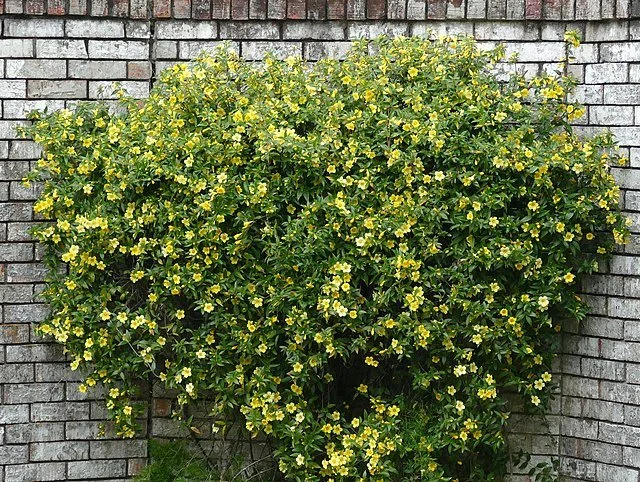
Gelsemium sempervirens, otherwise known as yellow jasmine or Carolina jessamine, is a flowering evergreen vine native to the southeastern United States. It is widely used in landscaping and horticulture for its attractive foliage and fragrant flowers.
The Gelsemium sempervirens plant has been a part of Southern culture for centuries. The Cherokee Indians were the first to recognize the medicinal properties of the plant and used it to treat numerous ailments including fever, sore throat, headaches, anxiety, and depression. In 1790, it was officially named by French botanist Andre Michaux who noted that it had many similarities with other species in the genus Gelsemium.
Any reference to medicinal or culinary use of plants or plant parts should in no way be considered an endorsement by The Ocala Food Forest or its staff. Research is crucial in safe and proper consumption or experimentational use of any plant.
Plant Information
| Scientific Name: | Gelsemium sempervirens |
|---|---|
| Family Name: | Gelsemiaceae |
| Common Name(s): | Carolina Jessamine, Yellow Jessamine, Evening Trumpetflower |
| Size: | Can grow up to 20 feet long as a vine, & 3–6 foot wide spread. |
| Plant Type: | Evergreen vine, Perennial |
| Origin/Geographic Distribution: | Native to the southeastern United States |
| Native to: | United States |
| Native range in the USA: | Common in states like South Carolina, Georgia, Florida, and Texas |
| Conservation Status: | Not threatened |
Cultivation
| Planting: | Best planted in early spring or fall |
|---|---|
| Sun Exposure: | Full sun to partial shade |
| Soil Type: | Well-drained, moist, humus-rich |
| Soil pH: | Acidic to nearly neutral (pH 6.8 to 7.2) |
| Water Requirements: | Medium, requires consistent moisture but not waterlogged |
| Fertilizer Requirements: | Light; apply a balanced fertilizer in early spring. |
| Pruning Requirements: | Prune after flowering to control growth and maintain shape |
| Growth Rate: | Fast; can grow several feet per year in ideal conditions |
| Companion Planting: | Complements azaleas and camellias; all thrive in similar acidic soil conditions |
Tolerance and Hardiness
| Drought Tolerance: | Low; requires regular watering during dry periods |
|---|---|
| Frost Tolerance: | Moderate; can withstand light frosts (down to about 20°F / -7°C) |
| Heat Tolerance: | High; can tolerate summer heat up to 90°F / 32°C |
| Wind Tolerance: | Medium; can withstand some wind but may need support in exposed sites |
| Salt Tolerance: | Low; not suitable for coastal areas with direct salt exposure |
| USDA Plant Hardiness Zones: | 7–10 |
Flower and Fruit Information
| Fruit Type: | Not significant, rarely produces noticeable fruit |
|---|---|
| Harvest Time: | N/A |
| Fruit Description: | N/A |
| Edible Plant: | No; all parts of the plant are highly toxic |
| Edible Parts: | None |
| Medicinal: |
Some people use it medicinally as an antispasmodic or sedative for treating conditions such as fever,
sore throat, headaches, anxiety, insomnia & depression.
However, due to its toxicity when taken internally in large doses, it should only be used under medical supervision. |
| Flower Color: | Bright yellow |
| Flower Shape: | Trumpet-shaped |
| Fragrance: | Highly fragrant, especially in the evening |
| Flower Bloom Time: | Spring (March to April) |
| Bloom Duration: | Several weeks |
| Pollination: Self or Other? | Attracts bees and butterflies for pollination |
Wildlife
| Attracts: | Bees, butterflies, and hummingbirds |
|---|---|
| Pollinators: | Bees, butterflies |
| Problematic Pest: | Scale insects and mealybugs |
Health and Safety
| Toxic: | Yes, all parts of the plant are toxic to humans and animals |
|---|---|
| Poisonous Parts of Plant: | All parts |
| Toxic to Humans: | Highly toxic; ingestion can be fatal |
| Toxic to Animals: | Highly toxic to pets and livestock |
| Plant Diseases to be aware of: | Susceptible to fungal diseases and root rot in poorly drained soils |
Companion Planting
For Carolina Jessamine (Gelsemium sempervirens), here are some ideal companion plants that are both Florida Native and Florida Friendly. Each plant listed will thrive in similar conditions and complement the growth and beauty of Carolina Jessamine:
Florida Native: Wax Myrtle (Myrica cerifera)
Zone Range: 7–11
Benefits: Fast-growing shrub that can provide a backdrop or support for the vine; attracts beneficial insects and provides berries for birds.
Use: Natural borders or screens.
Florida Native: Southern Magnolia (Magnolia grandiflora)
Zone Range: 6–10
Benefits: Evergreen structure and bold foliage contrast beautifully with Jessamine; can serve as a sturdy vertical element in the landscape.
Use: Background plant in larger landscapes.
Florida Native: Florida Anise (Illicium floridanum)
Zone Range: 8–10
Benefits: Evergreen foliage provides contrast and year-round interest; thrives in similar semi-shaded conditions.
Use: Understory plantings in shaded gardens.
Florida Friendly: Azaleas (Rhododendron spp.)
Zone Range: 5–9
Benefits: Spring bloom aligns with Jessamine; prefers similar acidic soil conditions for a harmonious display.
Use: Color under canopies or in semi-shaded beds.
Florida Friendly: Camellias (Camellia spp.)
Zone Range: 7–9
Benefits: Glossy foliage and fall/winter blooms provide interest before spring flowering begins.
Use: Layering for continuous seasonal blooms.
Florida Friendly: Gardenia (Gardenia jasminoides)
Zone Range: 8–11
Benefits: Fragrant white blooms complement the yellow flowers; thrives in similar light and soil conditions.
Use: Borders or foundation plantings.